Feel Great At Age 100

The Centenarian Decathlon: A Blueprint for Aging with Vitality

Have you ever found yourself doubting your ability to maintain your physical health as you age? It’s a common concern, but what if I told you there’s a way to not only preserve but enhance your vitality well into your later years? Enter the Centenarian Decathlon, a concept designed to help you set and achieve physical goals as you approach the age of 100. This plan, developed by Dr. Peter Attia, is all about maintaining your independence and health span, ensuring you can continue doing the activities you love.

Understanding the Challenge

As we age, it’s easy to fall into the trap of self-doubt, questioning whether we can keep up with the physical demands of life. The problem is that many of us lose essential motor skills and physical capabilities over time. This decline can lead to a loss of independence and a decrease in the quality of life. By setting specific goals and training intentionally, you can maintain your physical abilities and confidence for many years to come.

The Solution: The Centenarian Decathlon

The Centenarian Decathlon is a personalized plan that involves selecting ten physical tasks you want to be able to accomplish by the age of 100. These tasks are not just about exercise; they encompass functional movements and lifestyle activities that are crucial for maintaining independence. Here’s how you can create your own Centenarian Decathlon:

Step 1: Identify Your Goals

Think about the activities that are important to you. Do you want to continue hiking, playing with your grandchildren, or dancing? Make a list of ten activities that you want to be able to do in your later years. Consider tasks like:

1. Walking a 5K
2. Lifting a third of your body weight
3. Getting up from the floor without assistance
4. Climbing multiple flights of stairs
5. Carrying groceries for several blocks
6. Balancing on one leg for 30 seconds
7. Swimming or getting out of a pool unassisted
8. Practicing yoga or Pilates
9. Riding a bike at a steady pace
10. Engaging in activities like jump rope or trampoline exercises

Step 2: Assess Your Current Abilities

Once you’ve identified your goals, assess where you currently stand. Can you already perform some of these tasks, or do you need to build up your strength and endurance? This self-assessment will help you tailor your training plan to your specific needs.

Step 3: Develop a Training Plan

To achieve your goals, you’ll need a well-rounded training plan that focuses on building strength, flexibility, balance, and aerobic capacity. Here are some strategies to consider:

– Strength Training: Incorporate exercises like push-ups, squats, and weight lifting to build muscle strength. Aim to train each major muscle group at least twice a week.

– Flexibility and Balance: Practice yoga or Pilates to improve your flexibility and balance. These activities can help you maintain a wide range of motion and prevent falls.

– Aerobic Capacity: Engage in interval workouts to boost your aerobic capacity. Try activities like jumping jacks or cycling, alternating between high-intensity bursts and recovery periods.

– Aerobic Efficiency: Include longer, steady-state activities like walking, jogging, or biking at a conversational pace to improve your endurance.

Step 4: Stay Consistent

Consistency is key to achieving your Centenarian Decathlon goals. Make exercise a regular part of your routine, and track your progress over time. Celebrate small victories and adjust your plan as needed to stay on track.

Embracing the Journey

The journey to maintaining your vitality as you age is not just about physical health; it’s about fostering a deeper connection with yourself and making sure you can be around for your loved ones. By setting and working towards your Centenarian Decathlon goals, you’ll build confidence, enhance your self-esteem, and create a healthier, more fulfilling life.

Call to Action

Now that you have a blueprint for aging with vitality, it’s time to take action. Start by identifying your personal goals and developing a training plan that aligns with your aspirations. Remember, it’s never too late to invest in your health and well-being. Embrace the challenge, and you’ll find that the journey is as rewarding as the destination.

By focusing on these strategies, you can overcome self-doubt and build a future where you remain active, independent, and connected to the people and activities you love. So, How will you begin your Centenarian Decathlon and take the first step towards a fit, confident future?

Embracing Mindfulness: An Introduction to Meditation

Have you ever felt the weight of self-doubt holding you back? You’re not alone. Many of us grapple with the fear of not doing things “right,” especially when it comes to new practices like meditation. 🤔 I remember my first attempt at meditating; I was filled with uncertainty and nervousness. I questioned whether I was doing it correctly and worried about feeling bored or missing the point entirely. But through this journey, I’ve discovered that meditation is not about perfection—it’s about finding what works for you. 🌟

Overcoming Self-Doubt with Meditation
🧘‍♀️

Identifying the Problem

Self-doubt can be a significant barrier to personal growth. It often manifests as anxiety, a scattered mind, or an overwhelming sense of being unable to focus. These feelings can prevent you from fully engaging in activities that promote well-being, like meditation.

Finding the Solution

Meditation has been a transformative tool in overcoming these challenges. Here are some strategies that have helped me, and they might just work for you too:

1. Start Small: Begin with just 5 to 10 minutes a day. This manageable time frame makes it easier to incorporate meditation into your routine without feeling overwhelmed.

2. Use Guided Meditations: Apps like Headspace offer guided sessions that can help you navigate the initial discomfort and uncertainty. These sessions provide structure and support, making it easier to stay focused.

3. Embrace Personalization: Remember, there’s no “right” way to meditate. It’s a personal practice that should feel good for you. Experiment with different techniques until you find what resonates.

4. Practice Patience: Be gentle with yourself. Meditation is a journey, not a destination. Allow yourself the grace to learn and grow at your own pace.

5. Connect Mind and Body: Focus on the connection between your mind and body. This awareness can help you function better throughout the day, reducing anxiety and improving concentration.

The Benefits of Meditation 🌞

Through consistent practice, I’ve experienced numerous benefits that have enhanced my daily life:

Reduced Anxiety: Meditation has helped me manage anxiety by allowing me to acknowledge my thoughts without judgment. This acceptance makes it easier to let go of negative thoughts and move forward.

Improved Focus: By taking a few moments to breathe deeply and connect with my surroundings, I’ve found it easier to concentrate on tasks without feeling overwhelmed.

Enhanced Mindfulness: Meditation has taught me to be present in the moment, whether I’m enjoying a meal, spending time with loved ones, or simply taking a walk. This mindfulness has brought a sense of peace and serenity to my life.

Integrating Mindfulness into Daily Life

Mindfulness extends beyond meditation. It’s about being fully present and aware of the current moment without self-judgment. Here are some ways to incorporate mindfulness into your daily routine:

1. Observe Your Surroundings: Take a moment to notice the sounds, sights, and sensations around you. This practice can ground you in the present and reduce stress.

2. Acknowledge Your Feelings: Instead of resisting your emotions, allow yourself to experience them. Recognize when you’re feeling tense or anxious, and take steps to relax.

3. Practice Self-Compassion: Be kind to yourself. Accept your thoughts and feelings as they are, without labeling them as good or bad. This self-compassion can lead to greater peace and self-acceptance.

4. Focus on the Present: When your mind starts to wander, gently bring your focus back to the task at hand. This practice can help you stay engaged and reduce feelings of overwhelm.

Conclusion

Meditation and mindfulness have become integral parts of my life, helping me overcome self-doubt and fostering a deeper connection with myself and those around me. If you’re looking to build confidence, improve your mental health, and enhance your overall well-being, I encourage you to give these strategies a try.

Start small, be patient, and remember that there’s no right or wrong way to meditate. Embrace the journey, and you’ll likely find that meditation becomes one of your favorite parts of the day, bringing you immense peace and joy.

Take the first step today, and see how meditation can transform your life.

As always thank you for reading, and I hope this gives you the confidence to begin a meditation and mindfulness practice of your own.

Caelin Plants 💚

How to get a Great Night’s Sleep

Almost 30% of adults struggle with falling asleep or staying asleep. An estimated 1 in 3 adults do not get enough quality sleep, that is a huge amount of people. We all know that sleep is important, and that we feel better when we get good sleep. Why is sleep so important?

Sleep helps us maintain not only our brain and heart health, but also helps us to prevent chronic health conditions later on in life. Sleep also helps reduce stress and anxiety, improves our mood, helps us to retain information long term, and helps us learn effectively by creating new pathways in our brains. This means we can receive and retain more information day to day. Sleep amplifies creativity as well by making us more energetic and focused!

If you have ever experienced the sleep struggle then you are likely familiar with Insomnia. The sleeping disorder is very common (about 1 in 3 adults experience symptoms). About 10% of adults have severe enough sleep disruptions to classify it as a true disorder. Insomnia can make it difficult to fall asleep, stay asleep, or get good quality sleep. Lack of necessary sleep can make us feel tired or cranky throughout the day, it also drastically impacts our ability to focus and retain information.

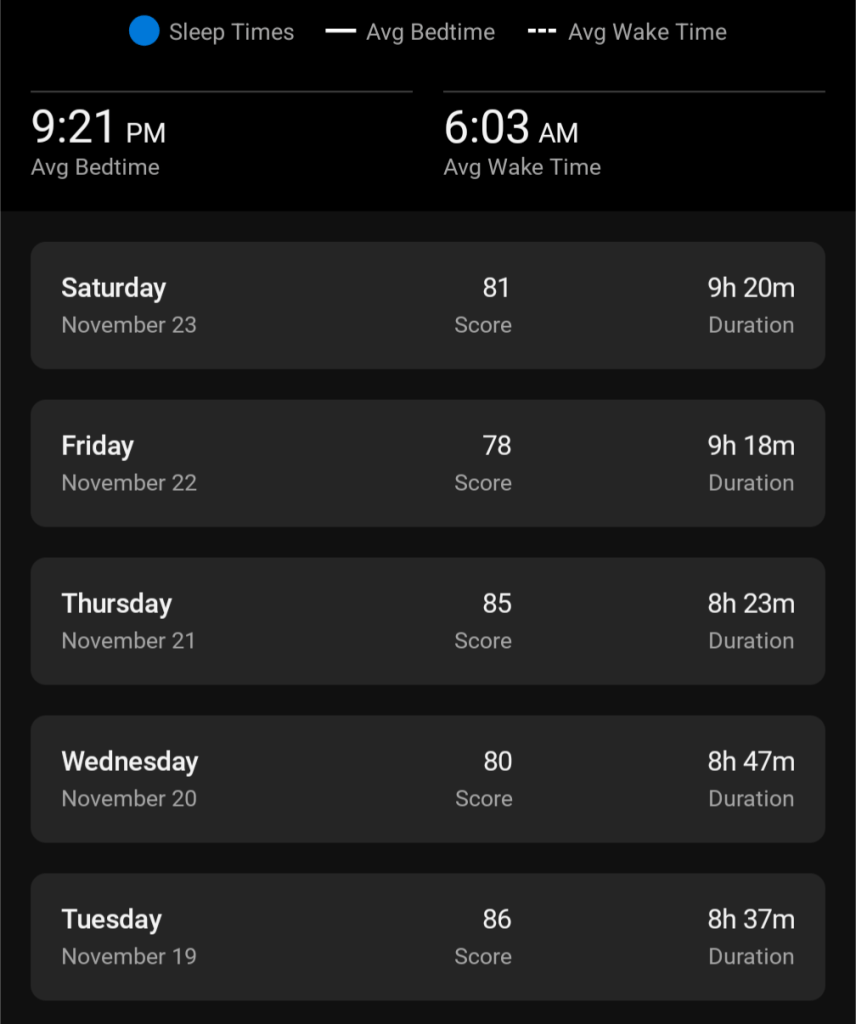
I struggled with Insomnia for many years, it was almost impossible for me to get more than three hours of sleep at a time, and even then it was poor quality. I never truly felt well rested. I started implementing new “sleep hygiene” habits and it has made a world of difference. I sleep so well now, usually between 8.5 and 9.5 hours each night. I do not tell you this to brag, but to share what has worked for me.

Proof I sleep good now ⬆

What causes sleep disruptions?

While many things can cause sleep disruptions, there are a few well known offenders such as stress, travel, work schedule, and lifestyle choices. I will be focusing on lifestyle choices sense they are most easily changed and within our control (for the most part).

Regular Sleep Schedule

Going to bed at all hours of the night harms your natural Circadian rhythm which regulates your twenty-four hour sleep/wake cycle. Winding down and going to bed at around the same time every night triggers your brain to make you feel sleepy at that time. Being consistent about your bed time is one of the best ways to ensure you will be able to fall asleep when you want to. The more you do this, the better it works. I now have a “go to bed” alarm, when I hear it I know that it is time to settle down for the night. This way I have a reminder every night to stop my work for the evening and get some rest!

Caffeine

I am not a coffee drinker, but I LOVE tea. I drink tea every day, and have for years, it is my favorite, but I never drink caffeinated tea after a certain time of evening. It is recommended to stop drinking caffeine about six hours before you want to sleep. For me this means no caffeinated tea after about 3PM, which I think is totally reasonable. Caffeine has a half life of about 6 to 8 hours, which means if you are drinking it late in the day it is still pumping through your system and keeping you wired while you are wanting to wind down.

Exercise

Getting regular exercise throughout your week will help improve your sleep. Aiming for three to five times per week is a great goal, and it doesn’t have to be perfect, just do what you can. The key here is to make sure you are finished with your exercise at least two hours before bed. If you exercise too close to bed time then you run the risk of still being amped up from your workout. All of the endorphins and adrenaline will still be fresh in your body and will not be helpful when trying to doze off.

Dinner

The same rule applies here, try not to have a big meal about two hours before your ideal bed time. If you eat a very large meal right before bed it is unlikely you will get quality sleep. Your body is having to work to digest and metabolize your meal and all of that work does not give your body the change to really calm down for ideal sleeping conditions. Eating at least two hours before bed allows your body to digest and settle before bed, meaning you won’t feel so lethargic and uncomfortable while trying to sleep.

Technology

We are all guilty of this, however we can get better! Try to not use your tech in bed (I know, that sounds rough). It is difficult, especially if you are used to looking at your phone or sleeping with the TV on, but here me out. Sleep experts recommend no technology in bed, and that bed should be a place for sleep and relaxation. Technology is meant to keep us alert, attentive, and engaged, none of which is conducive to a good nights sleep. Aim for no tech in bed thirty minutes before your ideal sleep time. This way you have a chance to disengage, and relax without all of that enticing colorful media shining into your eyeballs. Instead, try to journal, read a book, or do a crossword to relax before bed!

Naps

Taking naps during the day negatively impacts your sleep cycle, especially if you already struggle with sleeping. Do your best to hold off until bed time and then you will be tired at the correct time instead of the middle of the day. Along with this, if you regularly sleep on the couch, break that habit. Having a designated sleep space will help signal to your brain that that place is where sleep happens. The goal is for your bed to be THE PLACE for sleep, and for everywhere else to be for waking hours.

Ambiance

Your bedroom should be dark, quiet, and none stimulating. If you need a small light then you are not alone, just make sure it is small and not bright. I have a small salt lamp that puts off a dim red glow, it is not distracting, and it is not lighting up my whole room. Outside of a small night light like my salt lamp, I have no other lights in the room. I also have some lavender misting spray that i put on my pillow that helps me to feel calm and relaxed. I have invested in a cheap but effective eye mask that I use from time to time, it was especially helpful in the beginning when I would have trouble keeping my eyes closed. The last thing I do to set the ambiance is use my HeadSpace App. I go to the Sleep tab and listen to the “sleeping wind down” video they have, and it puts me down in five minutes or less. It is not loud or distracting, it is just the opposite.

Checking the Time

The first few weeks when you are trying to implement these changes, you will likely still have a bit of trouble falling asleep. If and when this happens, do not roll over and check the time. This will only lead to stress and stimulation. When you check the time every few minutes it will lead to overthinking, and stress about how awake you still are. The goal is to just lay there without looking at anything until you finally fall asleep. The impulse to check the time is coming from wanting to fight your sleep more. Don’t fall for it! If you need to then put your phone on the other side of your room so you can’t check it.

All of these points are free and can applied immediately, so if you are struggling with sleep try them out and let me know if they help. I really hope that they do, we all deserve a good night of sleep.

That’s all for now, thank you so much!

Caelin ❤

Growth Mindset VS Fixed Mindset

What is mindset? 🧠

Mindset is a set of beliefs and assumptions about yourself, your life, and the world around you.

Basically mindset is how you perceive everything that is going on around you in your life. Most importantly mindsets can be changed, this is good news because our mindset influences everything you do. That includes your habits, your reactions, and your success with goals.

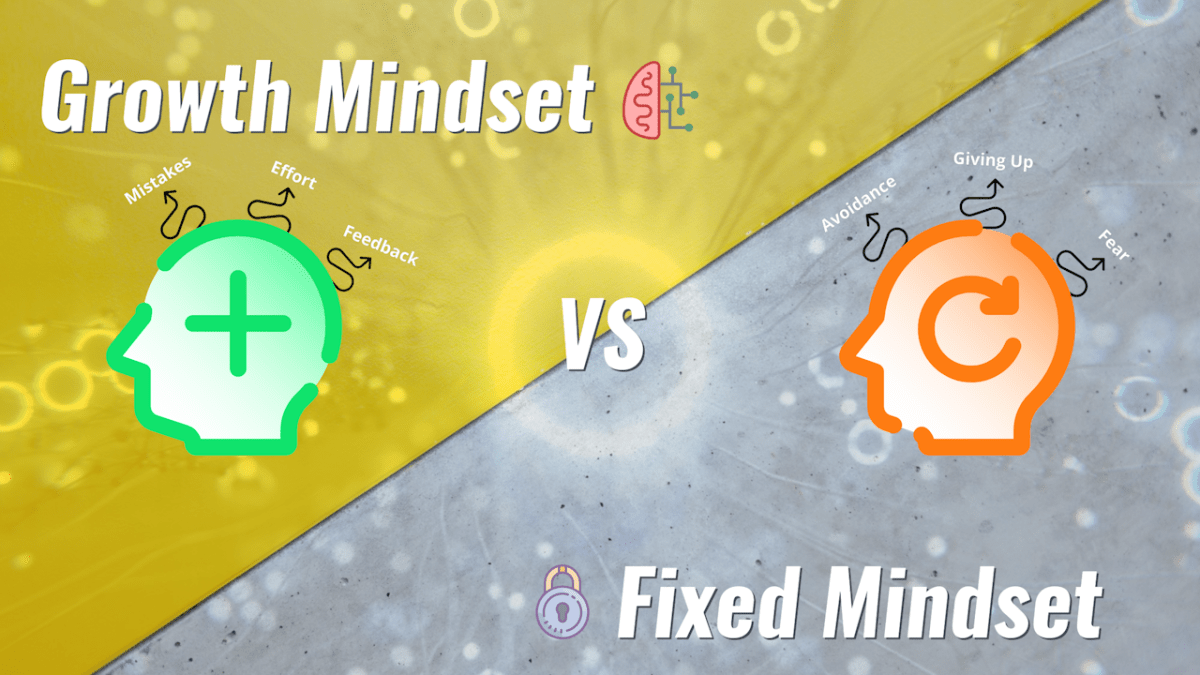
Stanford psychologist Carol Dweck identified two different types of mindsets, a fixed mindset and a growth mindset. A fixed mindset is the belief that your abilities and fixed traits cannot be changed or altered. A growth mindset is the belief that your talents and abilities can change and develop over time through effort and persistence.

If you are looking to achieve a growth mindset then hopefully that means you believe you can change your mindset and habits (which is true!), so let’s talk about how we can do that.

Building a growth mindset does not happen over night, it takes time and commitment to change the way we think. It will not be linear growth, so be patient with yourself and remember you can always change your habits, and the way we think is a habit!

8 tips on how to achieve a growth mindset: ⬇⬇⬇👀

1.) Start viewing challenges as opportunities to grow 📈

Challenges are always a great time to learn and grow from what you are going through. A new challenge can be scary, but after you face that fear it passes rather quickly. The only way past is through, and on the other side of it is everything you want. It won’t be as scary after you do it a few times.

2.) If you are not failing you are not learning 🚦

Failure is part of learning, it just has to happen in order for you to grow. I know that is frustrating (especially for people with perfectionist tendencies). There is this terrible stigma around failure, but that is the cost of entry. Failure is learning and learning is growth, so if you want to grow you must make friends with failure. Change the way you think about failure, and it’s almost guaranteed that you will reach your goal.

3.) Ask the right people the right questions 🙋‍♀️

Find someone that has what you want and ask for criticism. This does not have to be somebody that you know, it can be a mentor, coach, community leader, or just someone doing what you want to be doing. This person needs to actively be going in the direction you want to go, or achieving the things you want for yourself. Instead of looking at that person and feeling jealous, you need to ask questions. Get comfortable recognizing the areas you are struggling in and have people tell you how they got past those struggles. Feedback is so valuable if it is coming from a good source, you just have to be willing to take it and apply it.

4.) Put in the effort 💪

Instead of focusing on the negative thoughts, just get in the reps! If you are thinking to yourself how poorly things are going, and you are complaining and talking about how bad you are doing then this is for you. When those thoughts pop up, acknowledge them, and then put in the work. Bad at writing? Find some free writing prompts and practice. Bad at cooking? Hop on Pinterest and find some easy recipes to start with. Bad at Sewing? Joanns has free patterns and online classes you can take to get better! See where I am going with this? You may not be able to do it yet, you just gotta get those reps in.

5.) Growth is a process ✨

Growth and learning are not a destination, they are a process. You will never be done learning or growing, there is no finish line to get to. Having a growth mindset is a forever journey, that is the whole point. You can always get better, or improve a skill, learn more, or grow as a person. This can be fun if you have a growth mindset because the game never ends. Instead of looking at this process and thinking “I’m not there yet”, realize that there is nowhere to be. The only goal is forward progress, always and forever forward progress.

6.) Write down your goals 🖊

Research has show that writing down your goals increases the probability that you will reach them by up to 42%. The link to the study can be found Here. What I like to do is write down the main goal and then break it up into mini goals. This helps to make each goal more digestible and more easily achieved. So your larger goal is not so daunting and you can work towards it in steps. I would not suggest having more than three large goals at once, otherwise it may still become overwhelming. Once you see the progress happening with your mini goals you will be much more likely to continue on toward your main goal.

7.) Put yourself around people that emulate your goals 🤝

Your habits, thoughts, and actions are massively influenced by the people you spend the most time with. Putting yourself around people who have similar goals or are on a similar path will increase your chances of reaching your goals. If one of your goals is to read more, then join a book club. If one of your goals is to run a marathon, join a community running group. This will help you to pick up tips, ideas, and information that will benefit you and expedite your progress. People that share your goals will share insight and help you to develop the mindset it will take to achieve what you are setting out to do.

8.) Become more self aware 🤩

Self awareness is one of the largest obstacles on the path to a growth mindset. You have to know where you are in order to know where you should go. The best way I have found to really understand where I am in a process is to crack open a journal and ask myself some questions! Take about twenty minutes and get very honest with yourself about where you are right now. Are you open to new experiences, people, and habits? Are you closed off to new ideas or challenges? Are you confident in your ability to learn new skills, or does that make you feel anxious? These are the types of things you need to ask yourself. What we are looking for by doing this exercise is a side by side comparison of where you are right now, and where you would like to be. Set growth goals and also set a time frame for yourself. This will assist you to be more open with yourself about what exactly needs to change and what the next step should be.

Book recommendation:

The PMA Effect by John Joseph is one of my all time favorites. It is packed full of great information, exercises, and actionable steps to be able to get a head start of all of this. I read this book every year and I always take something new away from it. My personal copy is filled with sticky notes marking my favorite ideas, thoughts, and exercises. I would highly recommend getting a physical copy if you are a note taker like me!

That’s all for now, thank you so much for being here. I truly hope this was helpful to you, and I wish you luck on your journey.

Caelin 🤙

Mood-Boosting Foods to Add to Your Grocery List

One of the simplest ways to improve your mood is to prioritize a healthy diet. A healthy diet nurtures a healthy gut, this is important because of your gut microbes. The microbes in your gut produce neurotransmitters such as serotonin and dopamine when you eat nutritious foods. Neurotransmitters like serotonin and dopamine are best know for regulating and boosting not only our mood, but also our concentration. Nutrition psychiatry studies have found direct correlations between our diets and mental health.

Serotonin is not only responsible for making us feel happy and calm. This neurotransmitter is essential for our central nervous system development and function. It assists with our hormonal, autocrine, paracrine, and endocrine functions. So where is most of the serotonin produced in the body? You may be surprised to find out that only about ten percent is produced in your brain, and the other ninety percent is produced in your gut.

The science behind it:

Foods containing mood boosting nutrients like Zinc, Folate, Magnesium, Potassium, Vitamin C, Fiber, Iron, B Vitamins, and Omega-3 fatty acids help us to have energy, clarity, and reduce anxiety and depression throughout the day.

In contrast, foods high in fat, sugar, and salt (processed foods) are associated with increased anxiety and depression. These types of food can also make us feel lethargic and like we have brain fog.

Let’s get to the good stuff! Here are seven foods that will help boost your gut health and your mood –

1.) Dark Chocolate

Dark chocolate contains amino acids and weaker stimulants that can help improve our mood. These components of dark chocolate are known to produce both serotonin and dopamine, this helps us feel happier and can act as a defense against feelings of depression. Dark chocolate also has a high amount of Iron and flavonoids, making it great for decreasing inflammation and promoting healthy red blood cells.

2.) Blueberries

Blueberries are high in fiber, vitamin C, K, manganese, and potassium, making them great for lowering blood pressure, preventing heart disease,improving memory, and aiding in exercise recovery. Berries are rich in antioxidants, which also may help reduce depression symptoms. A diet high in fruit and vegetable intake is known to improve mental health. Blueberries in particular are being studied more for there potential ability to protect against cognitive decline that happens as we age.

3.) Avocado

Avocados contain Choline, a nutrient that your brain and nervous system use to regulate memory, mood, and muscle control. The mono-saturated fat found in avocados not only helps to maintain healthy cholesterol levels, but also has been found to help reduce anxiety specifically in women. Avocados are also high in B vitamins which help your body to make energy and lower stress levels.

4.) Spinach

Spinach is a significant source of vitamins K, A, and C, which promote healthy blood, normal vision, immune health, and muscle growth and recovery. It is also an excellent source of Folate as well. Spinach also contains high levels of Iron, Potassium, and Magnesium, we really should all be eating way more spinach!

5.) Green Tea

The amino acid Theanine found in green tea leaves helps to calm the mind and keep stress levels down. Theanine has also been found to reduce overall anxiety. Green tea is also high in antioxidants which may help to prevent and repair cellular damage. It may also help to reduce inflammation, decrease cognitive decline, and even protect against cancer and heart disease.

6.) Bananas

Bananas are especially rich in vitamin B6m which your body needs to create serotonin. One medium banana contains about 0.4 mg of vitamin B6 (about 25% of the daily recommended intake). Bananas are also a good source of Potassium, Magnesium, and fiber making them beneficial for digestion, and heart health. They are a good source of energy for the body, promote muscle function, and also contain antioxidants.

7.) Mushrooms

Mushrooms contain a lot of vitamin D, which has been shown to have impressive antidepressant qualities. Mushrooms are also one of the best sources of Selenium, a mineral that helps your body make antioxidants that can reduce cell damage. They also contain vitamins B2, B3, B5, and B9 (also known as Folate). B vitamins are essential for cell growth and formation, making mushrooms a very healthy food option!

Some thoughts on nutrition –

No one food is going to be a magical cure all, however making healthy dietary decisions daily will provide positive benefits for your physical and mental health. It is important to keep in mind that a healthy diet paired with exercise is the best way to reduce our risk of chronic diseases. Worldwide the most common noncommunicable diseases in order are cardiovascular diseases, cancer, chronic respiratory diseases, and diabetes related diseases. A healthy diet and regular exercise is the best way to prevent all of these conditions.

Thank you so much for reading, and I wish you nothing but health and happiness.

Pursuit, Plants, Serenity

Vegan Athlete Nutrition Tips

I have been vegan for six years now, and the questions I get the most are always in regards to nutrition. Nutrition is important to everyone, and as a vegan athlete I find it vital to maintain my nutritional needs. It takes a lot of time to really understand nutrition and as a new vegan it can be very difficult. There is a lot of information out there, and not all of it is simple, helpful, or correct. This post will cover exactly how I make sure I meet all of my nutrient and caloric needs, as well as some sources of information and my favorite educational material.

How to know what your nutrient needs are:

A great way to discover what your specific nutritional needs are is to find a nutrition calculator that will give you information based on your body composition. The best one I have found so far is Cronometer, I like it because it is so easy! You can just go to the website or download the app and it gives you tons of information. It will ask you about your age, sex, weight, and height. After you make your profile and fill out the info it will give you specific targets to hit daily. You will enter all the food you eat and it breaks down exactly what macronutrients, vitamins, minerals, carbs, and proteins you have consumed for the day. The daily report will tell you what you need to eat and how much to reach your targets for nutrients and energy. It even gives you a breakdown of what nutrients are in a specific food you entered into your log. The best part is you can get access to all of these features for free!

It is also important to take into account the amount of exercise you get on a daily basis as this will affect your target energy intake for the day. The more exercise you get and energy you burn throughout the day, the more you need to be eating to replace that energy. Using Cronometer helps me to keep a food diary and that way I can make sure I do not over indulge the sweet treats and snack foods, and instead get good nutrient dense calories to replenish my energy.

What about supplements?

Supplements can be great if you use them for their intended purpose. Supplements are meant to help fill in the gaps in your diet, they are not a replacement for nutritious eating. Above all else you should strive to meet your nutrient and calorie goals with fresh or frozen foods and whole grains. The supplement you take should be for those vitamins and minerals that are difficult to get in your diet or that you are consistently low on.

I do take a daily supplement and I have for years. Supplements are not only good for people who are on a vegan diet, almost everyone could benefit from a daily supplement. I would encourage you to do a lot of research about the supplements before you start taking them as not all of them are as beneficial as they advertise. I personally take Hippo7 vegan complete, and additionally a C vitamin everyday. The Hippo7 daily vegan complete is a completely vegan supplement designed for vegans. The supplement includes vitamins B12 and D, Iron, Zinc, Iodine, Calcium, Omega-3s DHA, and EPA. I have been very pleased with Hippo7 and will definitely continue to order from them. I also include the supplement in my daily food diary on Cronometer.

Let’s talk vegan protein!

If you are a gymshark or an athlete then I know you think about protein all the time. When you are trying to build up muscle, endurance, or just stay mobile and limber it is vital that you get your protein in. I personally aim for 144g of protein everyday since I am a very active person. I do not find it challenging to meet this goal as a vegan. It is simple and easy to meet your protein goals as a vegan, protein is everywhere! Some things that I eat everyday to make sure I get my protein in are fortified cereals, vegan protein powder, tofu, oatmeal bars, nutritional yeast, and even rice!

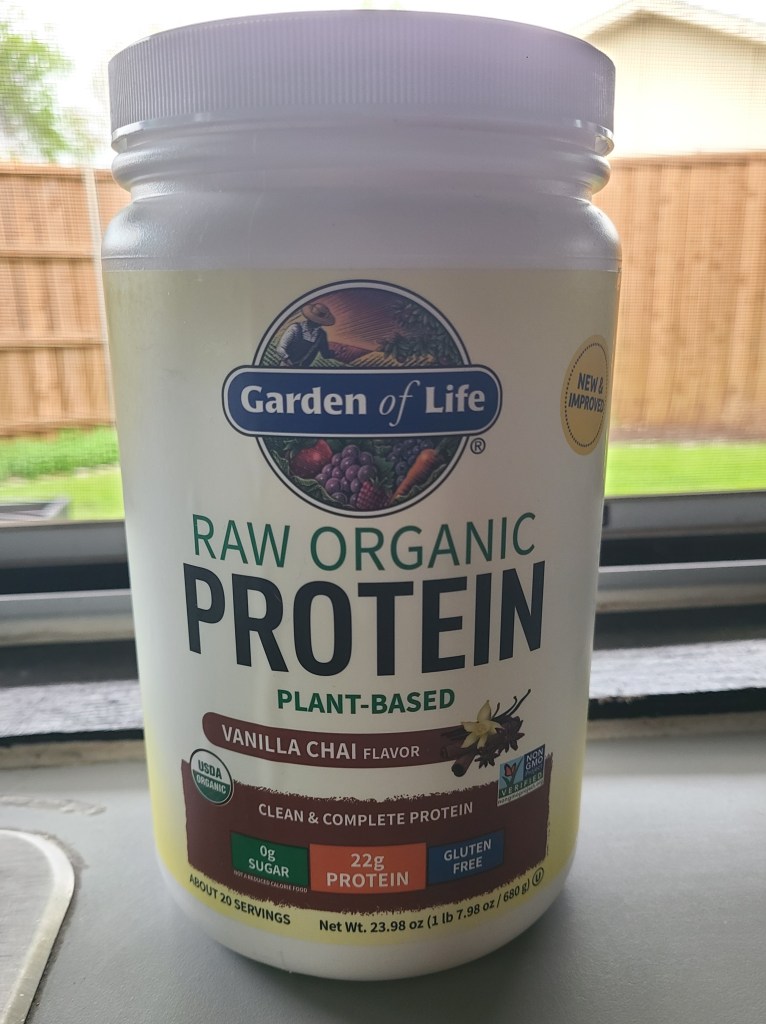
The cereal I eat is a high fiber cereal that I get about 30g of protein from in the mornings. It is a bit expensive but I really like it so I splurge a bit on it. The brand is Catalina Crunch, I get the cinnamon toast flavor. I started buying it for its high fiber content as I believe a high fiber diet is a healthy diet. The vegan protein powder I get is Garden Of Life brand and is both vegan and organic. I like the vanilla chai flavor, it is so good! This protein powder has 22g of protein per scoop and is a complete protein source. Complete proteins means they contain all nine essential amino acids in consistent amounts.

Firm tofu is my preferred type of tofu since it is such a great source of protein and also is a complete protein. Firm tofu contains about 22g of protein per half cup serving, and because it is so versatile it is easy to work quite a bit of tofu into your daily diet. Nutritional yeast has about 11g of protein in only three tablespoons. I sprinkle the large flake nutritional yeast on just about every savory dish I make, it has a great cheesy flavor.

Other great vegan protein sources are lentils, black beans, chickpeas, seitan, tempeh, oats, quinoa, and wild rice. Make sure that your daily protein intake aligns with your personal needs, everyone is different.

Carbohydrates are not evil –

Carbohydrates are one of three macro-nutrients, they are the preferred source of energy for nerve cells, and are an important energy source for all cells. Your body needs carbohydrates to function properly, and they should make up most of your plate during meals. My personal target for this macro is about forty five percent of my daily intake. Good sources include fruits, vegetables, and grains. Some of my favorite complex carb sources are oats, lentils, sweet potatoes, broccoli, and whole grain pastas. Carbs help to prevent muscle loss and also aid in muscle recovery.

Complex carbs like beans, nuts, and potatoes are the healthiest option. Complex carbs are digested slowly, this means that they release glucose into the blood stream more gradually. Simple carbs such as soda, candy, and baked treats are digested quickly and spike blood sugar faster and higher. Complex carbs are more filling, full of fiber, and help to maintain a healthy weight as well as increase digestive health. Complex carbs are also notably a large part of the diet of people around the world who live in blue zones. This may be part of the reason we see the population in these areas living longer with less health issues overall.

Lipids in a healthy diet –

Fats are the lipid content of diets and foods, they are essential for energy in a healthy diet. Monounsaturated fats and polyunsaturated fats are healthy for your heart and help to lower LDL cholesterol levels. These types of essential fatty acids decrease risk for heart disease and stroke, as well as help to boost HDL cholesterol (that’s the good kind)!

Avocado, seeds, nuts, and olives are just a few sources of healthy fats. I aim for fats to be about thirty percent of my daily nutrient intake. Eating healthy fats like these is important for brain health and brain function, healthy skin, vitamin absorption, and decreased overall inflammation.

Food for thought –

Although it can be easy to get caught up in all of the metrics and obsess over the numbers, try not to. Do your best, and have your goal be that you do a little better everyday. Expanding your knowledge, making sure you know your body, and know what makes you feel healthy is what is most important. Every person is different, so what works for me may not work for you. I encourage you to do your own research and build your own habits.

Nutrition is very scientific, however there is no one size fits all with this stuff. Everything really depends on your body and lifestyle, so please make sure you do what feel right for you. I would love for you to comment your own experiences with nutrition and what your goals or routines are. I will also answer any questions about my personal goals or habits to the best of my ability.

Pursuit, Plants, Serenity

How I Trained For My First Half Marathon

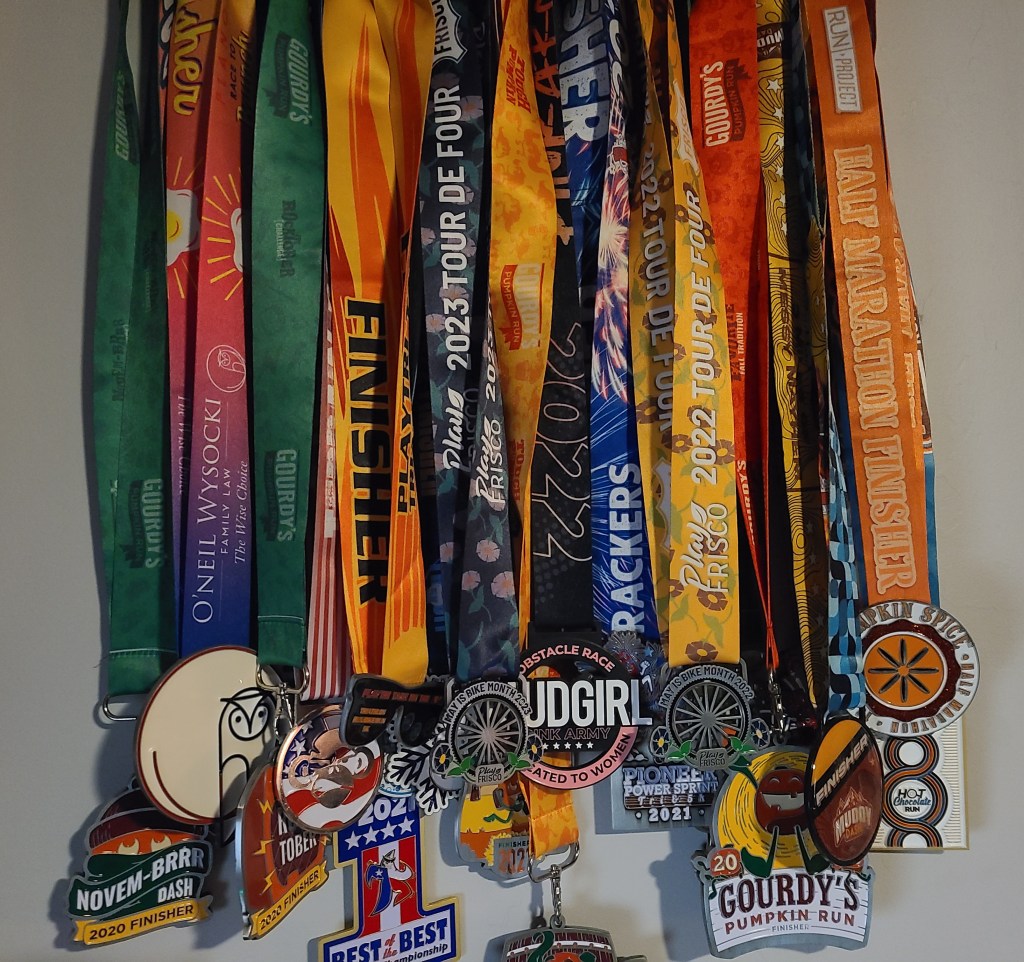
When I first started running I mostly participated in 5K runs that were local and I was not very concerned with how quickly I finished the run. I finished about fifteen of these 5K events over the course of about two years and then I decided I wanted to do something a bit more challenging so I signed up for obstacle races that had between twelve and twenty obstacles, but were the same distance, still about 3.1 miles. That trend of wanting a bit more of a challenge continued and I went on to finish a 10K, 15K, and most recently a half marathon.

I am very happy with the progress that I have made and I would love to share the knowledge I have gained. Most of what I have learned has been through trial and error, some of it I learned from books and friends. The single piece of information that I believe has helped me the most is fixing my body position while I run. I used to run with my shoulders tense and high up like I was bracing for something. I used to run with my stride way longer than what is natural or comfortable for me. The worst is that I would also run much faster that what I was really capable of for any type of distance longer than a sprint.

I went running with a friend of mine a while back that told me I needed to run in a more relaxed and comfortable position. I dropped my shoulders, relaxed my hands and let my arms drop closer to my waist. This helped dramatically, it also assisted with helping me not to get stitches while running because I could breath easier. I then read the book Finding Ultra by Rich Roll where he talked about his coach teaching him to run slower than he thought he could, and for as long as he could. Similar to Rich I thought that sounded dumb, why would I run slower if I was trying to get better? In the book he realized the coach was onto something so I decided to give it a go as well. Not so surprisingly this really worked, I shortened my stride and ran at a comfortable pace where I was still able to hold a conversation or sing. After doing this for a few weeks I really noticed a difference.

I was able to keep my pace for a lot longer, and I was not gasping and out of breath by the end of my run. I was able to almost double the amount of time I could run with out stopping. I also noticed that after my longer runs I was not so exhausted and my muscles were not so achy. I was able to recover faster with less discomfort between recoveries. Slowly I was able to pick up my pace and now I had some way to know if I was running too fast or with too much tension in my body. If I could no longer hold a conversation, I needed to slow down. If i started to get too winded or get a cramp, I needed to consciously relax my body.

Once I fixed the mechanics of my run it was time to set a schedule. My fiance and I already go to the gym five days a week most weeks anyways so it was just a matter of working the runs into my routine. For me that looks like running for at least three and half or four miles three to five times a week. Not all my runs happen at the gym and I also do longer runs to make sure that I am training for the longer distances that I want to cover in a race. I frequent my local community trails and also a nature preserve that has nice paved and dirt trails. I do this mainly on the weekends since that is when I have more time for longer runs. On my longer runs I try to do six to ten miles, I do not run the full distance I am actually training for.

When I do these longer runs I normally go alone because I like to have my headphones in. I listen to audio books or podcasts so that I have something to keep my brain busy and I can just run. I sometimes take my dogs when the runs are closer to six miles, they are good company. The dog do not come when the runs are longer than this because they get bored or tired and I end up having to cut my run short. I would recommend finding something that you can listen to for an extended period of time so that you do not have to stop to skip or change songs.

I like to change up where I run and the conditions in which I run so that I am prepared for any type of race course, plus it also helps to not get bored while you are training. I like to use the app AllTrails to find trails in my area, the app also allows you to look at photos, lengths, and ratings left by others so you know what you are getting into. I try to find trails with varied distance, elevation gain, terrain, etc. This allows me to really challenge myself and get comfortable running in all conditions. I run in varied (safe) weather conditions for the same reason.

Recently I have been trying to find trails with a more difficult elevation gain so that uphill runs are not so hard for me. I have done a couple of races that had pretty steep uphill sections and they really had me wondering if I was gonna make it. I have been making progress, and now even when I run trails with little to no elevation gain it seems that much easier. I am becoming a fan of making the training a little more challenging than the race will be so that the race seems easier in comparison.

Finding the right clothing for runs was also a learning experience, there are a lot of clothing options to choose from. Just know that you do not need the latest and greatest most expensive things available to be a runner. You can use whatever you already have, and if you are looking to get something new or upgrade, it does not need to be name brand or cost hundreds of dollars. I have only a handful of running/exercise clothing that I use, some of which I got when signing up for races.

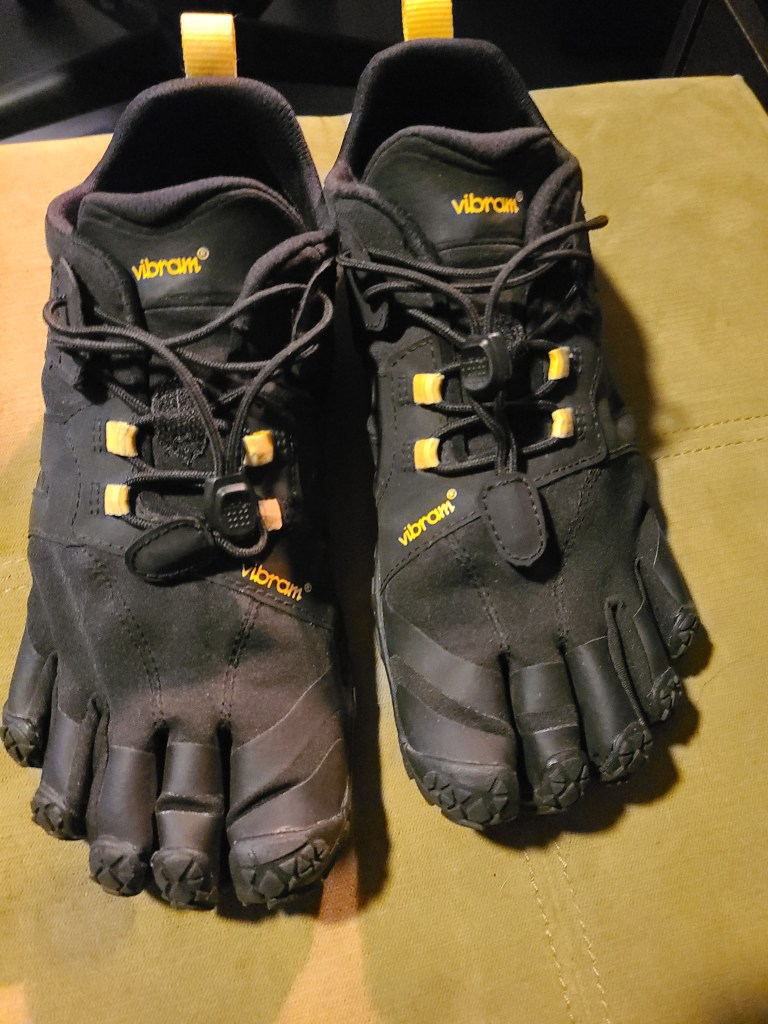
I have a few shirt, only one long sleeve, a few pairs of shorts, a couple pairs of legging, two pairs of shoes, some socks, and then weather accessories like a light jacket and a warm headband. The only thing I have spent a considerable amount of money on is shoes, and that is because in my opinion having the right shoes will make or break a running experience. It is really important to me to take care of my feet. I have one pair of light flexible mesh running shoes, and one pair of barefoot shoes. You know the ones with toes that look like a shoe/sock hybrid. I love them, they are comfortable, my feet do not hurt, and my foot and toes have a lot more natural range of motion. The one mistake I made with these shoes is not wearing socks with them the first long run, I got blisters and then immediately bought socks to go with those shoes. Since then, they have never let me down!

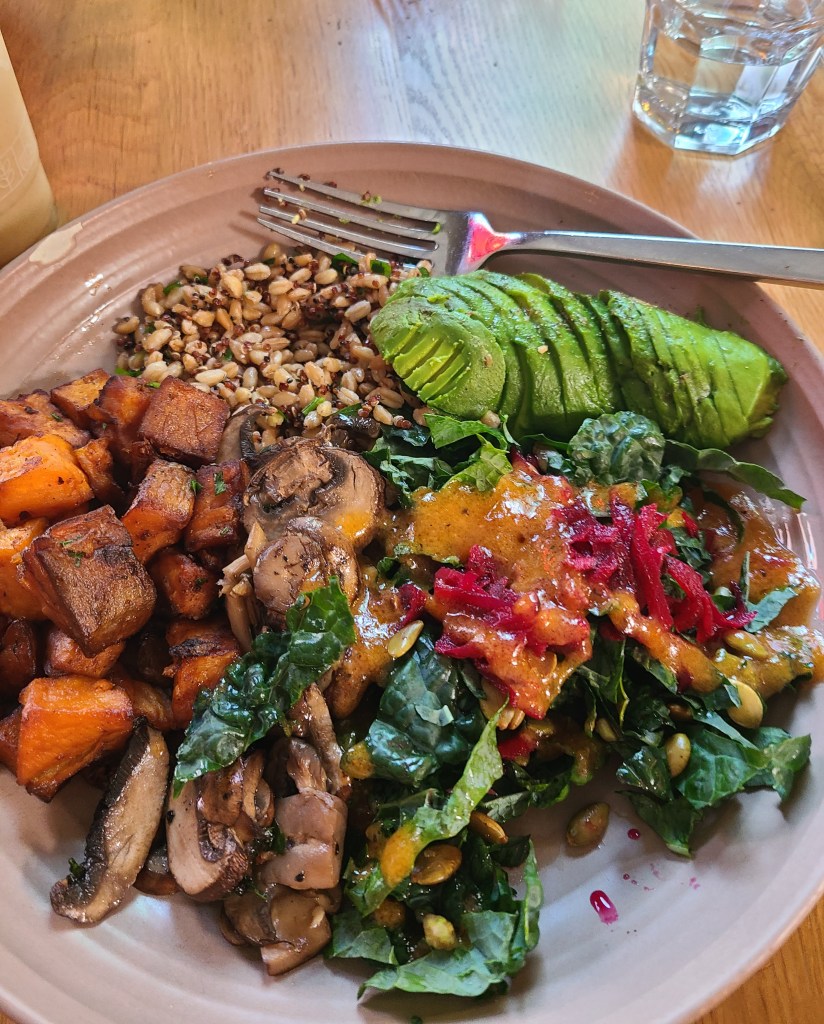
Before and after your runs you need to make sure you are getting adequate rest, recovery, and nutrition. Get in a good routine of planning out meals that are nutrient dense, and full of all the calories you expended. You need to replace the electrolytes, water, and everything else that you lost during your work out. I make sure to eat something high in fiber and fructose before I run like a banana, and often some nuts or seeds as well. After my run I load up on protein, good fats like avocado, and plenty of vegetables (my favorite is spinach). I also get my carbs in with brown or wild rice, quinoa, sweet potatoes, and beans!

For recovery I stretch and use my foam roller, I also do yoga a few times a week to make sure I stay flexible and have a good range of mobility. A few months ago I started going to a local cryotherapy place and doing the whole body cryotherapy for three and half minutes. I also like to do their sauna service, and compression therapy for when I really need the extra recovery help. The most important thing you can do is hydrate and getting plenty of quality sleep. This more than anything else will help you to feel your best after a challenging run. \

Finding a good community of people to go on runs with or to ask questions and get tips from is a great idea. Go to your local running shop and just look around, talk to the employees. They very likely have community runs a few times a week that are beginner friendly and they can help you get where you want o be. These shops usually have a great selection of gear, reading material, and loads of resources and group activities for those just getting into the sport. It can be intimidating, but do not let that stop you, everyone starts at the beginning, and the people at that shop are no exception!

Finally, I would like to say that it is important to know your “why” when it comes to longer distance runs. What intrinsically motivates you? What extrinsically motivates you? These are important things to ask yourself before a long race. Knowing the answers to these questions is what will get you to that finish line. It’s what will get you through the longer training sessions, the cold or hot days, and the sore muscles. You have to know why you want to finish. Is it so you can feel proud of yourself? Is it because you told a friend you would? Is it because you are supporting a cause? Any of these reasons are fine as long as they are meaningful to you.

Thank you for reading and allowing me to share what I have learned. I hope there is something in here that was helpful to you and I wish you luck on your running journey! You totally got this!

Pursuit, Plants, Serenity.

Change Your Brain With Meditation

I started a meditation practice a few years ago during the COVID lock down. My (then boyfriend, now fiance) and I were sitting in a parking garage taking a break from riding around town on our Onewheels. While we sat there he turned on a live stream that Davey Havok had posted, I was partially listening and kind of playing around on my phone until I heard him start talking about meditation. I’m not sure what it was that he said that caught my attention, but I became laser focused. He mentioned that it had become a daily habit for him, and that he had really benefited from doing it. He mentioned the app that he used and at that time given the state of the world I was intrigued about the benefits he claimed.

I had never though too much about meditation, it sounded a little boring and pointless. It made me feel uncomfortable to even think about sitting totally still doing nothing but being alone and focused on my thoughts. At that time my thoughts were chaotic and anxious, nothing I wanted to sit with and give more attention to. I wanted to be distracted from these thoughts, my hope was that eventually they would go away. Now I know that the exact opposite happens, the more you try to push those types of thoughts out, the more frequent and frustrating they become.

When I first started my meditation practice it was difficult and I felt I was not doing it right. My expectation was that I would sit there and be still and quiet and then feel peaceful after a few minutes. I was wrong, it was hard to keep my eyes closed, and harder not to check the time every twenty seconds. I could not make my thoughts quiet down, or focus, or do any of the things that other people talked about when it came to meditation. So I did the thing I normally do and I read a lot of books about it and listened to some podcasts where scientists would talk about what happens to your brain when you have a meditation practice. What I found was that what I was experiencing was exactly what almost everyone else experiences when they first start.

I did not give up and I became comfortable with the discomfort, and better yet I became very patient with my brain. Now a few years later I am still far from perfect at it. I can however sit through the whole practice without opening my eyes, without getting frustrated, without feeling the need to check the clock or rush off to do something else. I do feel peaceful afterwards, and I am so glad I started and stayed with the practice.

So what actually happens to your brain during meditation? Meditation has been found to enable neuroplasticity by improving cognition, attention, and memory recall. Certain types of meditation have also been linked to lowering stress, lowering blood pressure, and even reduced risk of cardiovascular and cancer caused mortality. Those who practice regularly were shown to improve constructive thinking as well as creative thinking. Practicing meditation has also shown to improve overall life satisfaction, mood, quality of life and even help those who are afflicted with chronic stress, depression, and substance abuse. People report that both professional and personal relationships improved after adopting the practice.

Looking even closer at what happens, researchers have found that doing regular meditation increases gray matter in the brain. What does this mean? Coating the surface of most other brain structures is a thin and very important layer of tissue. This layer is called the Cerebral Cortex, the largest brain structure in humans. This tissue accounts for about two-thirds of the brains mass. This is where most information processing takes place and what is referred to as “gray matter”. Folds in the brain add to the surface area of the Cerebral Cortex, the more folds, the larger the brain and the greater the cognitive ability of that brain. Studies have found that thirty to forty five minutes of meditation daily leads to an increase in gray matter.

For me finding out about all of the potential benefits of meditation was enough to give it a try. I personally use the Headspace app and I can not say enough good things about it. After a few months of use I really started to be able to see the benefits in my life. I was less reactive to stressors that happened throughout my day. I noticed myself being more patient with myself and others, I was not so easily would up. Now I look forward to it first thing in the morning and in the evening before bed.

You do not have to pay for a subscription to be able to meditate daily, there are loads of guided meditations for free on YouTube. If you prefer non guided meditation you can always do your own research and start a practice on your own with no guides. There are different types of mediation practices such as Zen meditation, Yoga Nidra, calming, and insight meditation. All have unique benefits, and none of them are right or wrong, it is all about what works for you!

You may even find it helpful to read some books about mediation, or go to a class for your first time to see how the practice is structured. I really do not think there is any wrong way to start or do meditation, as long as you are seeing the benefits and it is leading you to a better quality of life. I will reiterate that it will likely be a challenge at first, and that is perfectly fine. Moving through challenging things is how we evolve and grow, so do not let that intimidate or stop you from trying!

I would also like to go ahead and point out that you do not need a fancy mat or cushion from Target, or special beads, singing bowls, socks, or anything else to start a practice. Just you sitting on your bed, couch, or floor is absolutely acceptable. You can do it in clothes you already have and without any cute gadgets. Once you decide to stick with it, if you then want to purchase some items then that is totally up to you. Just do not let the Pinterest perfect aesthetic of meditation hold you up from starting.

Meditation is a great habit to add to your daily life and has incredible benefits for something so inexpensive and not too time consuming. Starting even with just five minutes is a big step in the right direction. Start and then build on that habit, and watch your day to day become calmer and more serene. I hope you find this habit as beneficial and life changing as I have. Thank you so much for reading along and if you have any comments or questions I would love to read them!

Pursuit, Plants, Serenity.