Embracing Change: Navigating Disappointment and Managing Expectations

Life rarely goes exactly as planned. Whether it’s a canceled event, a missed opportunity, or an unexpected twist, disappointment is an inevitable part of the human experience. But what if we could learn to navigate these moments with grace and even find peace in the process? This blog post explores how to manage expectations, embrace change, and turn disappointment into an opportunity for growth.

The Problem with Rigid Expectations

We’ve all been there – you’ve been looking forward to something for weeks, only for it to fall apart at the last minute. Maybe the weather ruined your outdoor plans, or a work deadline forced you to cancel a much needed getaway. In those moments it’s easy to feel frustrated, angry, or even defeated. But often, the root of our disappointment lies in the expectations we’ve set for ourselves or others.

When we visualize exactly how something should go, we create a mental box that limits our ability to adapt. For example, you might imagine a perfect day at the beach, sunny skies, calm waves, and a picnic with friends. If it rains, or if traffic delays your arrival, the entire experience feels ruined. The truth is, the day could still be enjoyable if we let go of our rigid expectations and embrace what’s actually happening.

Why Expectations Can Hold Us Back

Expectations aren’t inherently bad, they help us set goals and plan for the future. But when they become too narrow or unrealistic, they can do more harm than good. Here’s how:

They Limit Our Ability to Adapt: When we’re fixated on a specific outcome, we’re less open to alternative possibilities. This can prevent us from making the most of a situation, even when it’s not what we originally envisioned.

They Create Unnecessary Stress: Putting too much pressure on ourselves to meet certain expectations can lead to anxiety and frustration. For example, stressing over being “on time” for an event when no one else is even keeping track.

They Blind Us to Opportunities: Sometimes, what we want comes to us in a different form than we expected. If we’re too focused on the “packaging,” we might miss out on something truly valuable.

How to Manage Expectations

The good news is that managing expectations is a skill you can develop. Here are some strategies to help you navigate disappointment and embrace change:

1. Practice Being Present

One of the most effective ways to manage expectations is to focus on the present moment. Instead of imagining how something should go, try to take things at face value. This doesn’t mean you can’t plan or look forward to things, it just means you’re open to whatever unfolds.

For example, if you’re attending a social event, resist the urge to predict how it will go. Instead, focus on enjoying the people around you and the experience as it happens. You might be surprised by how much more enjoyable it becomes when you’re not constantly comparing it to your expectations.

2. Let Go of Perfection

Perfection is an illusion, and chasing it only sets us up for disappointment. Instead of striving for the “perfect” outcome, aim for “good enough.” This mindset shift can help you appreciate the small wins and find joy in imperfection.

For instance, if your outfit isn’t exactly what you planned to wear, remind yourself that it’s not the end of the world. Wear something that makes you feel comfortable and confident, and let go of the idea that everything has to be perfect.

3. Re-frame Disappointment as Opportunity

When things don’t go as planned, it’s natural to feel disappointed. But what if you could see these moments as opportunities for growth? For example, a canceled trip might give you the chance to rest and recharge at home. A missed deadline could be a reminder to prioritize self-care and set more realistic goals.

By re-framing disappointment, you can turn a negative experience into a positive one. This doesn’t mean you have to be happy about every setback, it just means you’re choosing to focus on the silver lining.

4. Limit Unnecessary Expectations

Not every situation requires expectations. For example, you don’t need to put pressure on yourself to have the “perfect” day or the “perfect” relationship. Instead, try to approach life with curiosity and openness.

Ask yourself: Why am I setting this expectation? Is it because I’m trying to uphold an image? Or because I’m afraid of disappointing others? Often, the expectations we place on ourselves are unnecessary and only serve to stress us out.

5. Embrace Flexibility

Life is unpredictable, and the more flexible you can be, the easier it will be to navigate change. This doesn’t mean you have to give up on your goals or stop planning altogether—it just means you’re willing to adapt when things don’t go as planned.

For example, if you’re running late for an event, remind yourself that it’s not the end of the world. Focus on what you can control, like staying calm and making the most of the time you have.

The Benefits of Letting Go

When you let go of rigid expectations, you open yourself up to new possibilities. You might find that you’re more open to trying new things, meeting new people, or exploring new opportunities. You’ll also likely feel less stressed and more at peace with whatever life throws your way.

If you’re starting a new business or pursuing a personal goal, try to let go of the idea that everything has to happen on a specific timeline. Instead, focus on making progress and enjoying the journey. You might find that the process becomes more enjoyable (and even more successful) when you’re not putting unnecessary pressure on yourself.

Managing expectations and navigating disappointment isn’t always easy, but it’s a skill worth developing. The next time you find yourself feeling frustrated or disappointed, take a moment to reflect on the expectations you’ve set. Are they realistic? Are they necessary? And most importantly, are they serving you?

Try to approach life with curiosity, openness, and flexibility. Let go of the need for everything to be perfect, and embrace the beauty of imperfection. You might be surprised by how much more enjoyable and fulfilling life becomes when you’re not constantly chasing an idealized version of it.

So, the next time a wrench gets thrown in your plans, take a deep breath and remind yourself that it’s not the end of the world. Instead, see it as an opportunity to practice resilience, adaptability, and self-compassion. After all, life is a journey and sometimes, the detours are the most rewarding parts.
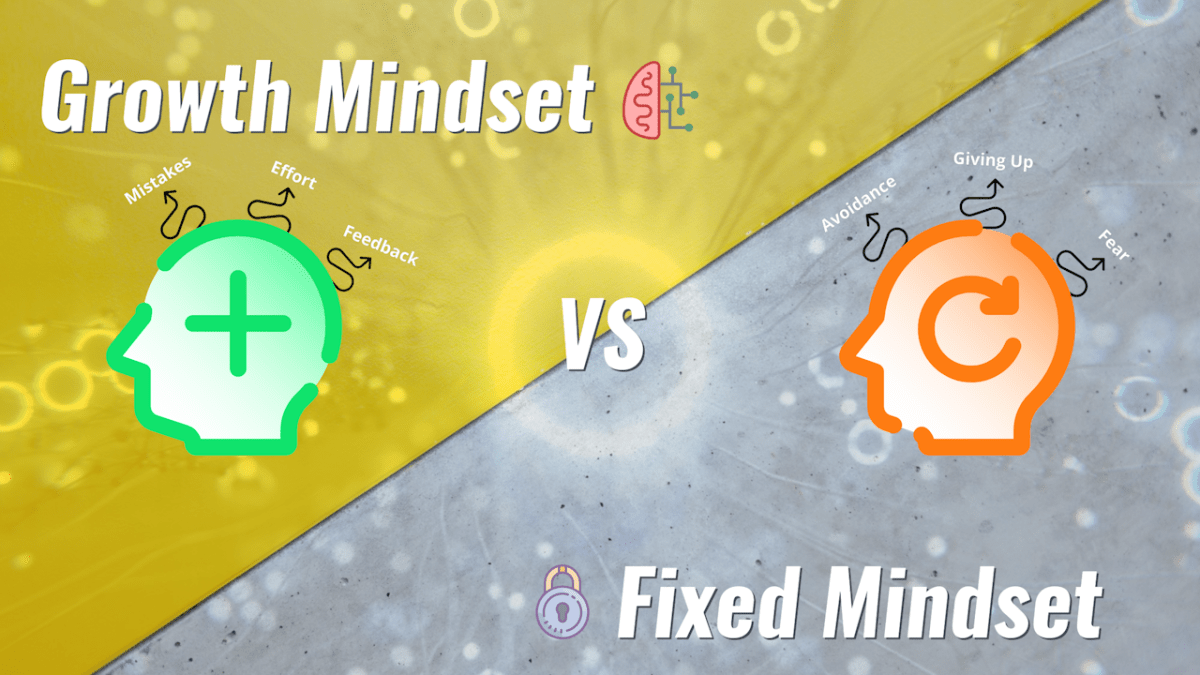

Growth Mindset VS Fixed Mindset

What is mindset? 🧠

Mindset is a set of beliefs and assumptions about yourself, your life, and the world around you.

Basically mindset is how you perceive everything that is going on around you in your life. Most importantly mindsets can be changed, this is good news because our mindset influences everything you do. That includes your habits, your reactions, and your success with goals.

Stanford psychologist Carol Dweck identified two different types of mindsets, a fixed mindset and a growth mindset. A fixed mindset is the belief that your abilities and fixed traits cannot be changed or altered. A growth mindset is the belief that your talents and abilities can change and develop over time through effort and persistence.

If you are looking to achieve a growth mindset then hopefully that means you believe you can change your mindset and habits (which is true!), so let’s talk about how we can do that.

Building a growth mindset does not happen over night, it takes time and commitment to change the way we think. It will not be linear growth, so be patient with yourself and remember you can always change your habits, and the way we think is a habit!

8 tips on how to achieve a growth mindset: ⬇⬇⬇👀

1.) Start viewing challenges as opportunities to grow 📈

Challenges are always a great time to learn and grow from what you are going through. A new challenge can be scary, but after you face that fear it passes rather quickly. The only way past is through, and on the other side of it is everything you want. It won’t be as scary after you do it a few times.

2.) If you are not failing you are not learning 🚦

Failure is part of learning, it just has to happen in order for you to grow. I know that is frustrating (especially for people with perfectionist tendencies). There is this terrible stigma around failure, but that is the cost of entry. Failure is learning and learning is growth, so if you want to grow you must make friends with failure. Change the way you think about failure, and it’s almost guaranteed that you will reach your goal.

3.) Ask the right people the right questions 🙋‍♀️

Find someone that has what you want and ask for criticism. This does not have to be somebody that you know, it can be a mentor, coach, community leader, or just someone doing what you want to be doing. This person needs to actively be going in the direction you want to go, or achieving the things you want for yourself. Instead of looking at that person and feeling jealous, you need to ask questions. Get comfortable recognizing the areas you are struggling in and have people tell you how they got past those struggles. Feedback is so valuable if it is coming from a good source, you just have to be willing to take it and apply it.

4.) Put in the effort 💪

Instead of focusing on the negative thoughts, just get in the reps! If you are thinking to yourself how poorly things are going, and you are complaining and talking about how bad you are doing then this is for you. When those thoughts pop up, acknowledge them, and then put in the work. Bad at writing? Find some free writing prompts and practice. Bad at cooking? Hop on Pinterest and find some easy recipes to start with. Bad at Sewing? Joanns has free patterns and online classes you can take to get better! See where I am going with this? You may not be able to do it yet, you just gotta get those reps in.

5.) Growth is a process ✨

Growth and learning are not a destination, they are a process. You will never be done learning or growing, there is no finish line to get to. Having a growth mindset is a forever journey, that is the whole point. You can always get better, or improve a skill, learn more, or grow as a person. This can be fun if you have a growth mindset because the game never ends. Instead of looking at this process and thinking “I’m not there yet”, realize that there is nowhere to be. The only goal is forward progress, always and forever forward progress.

6.) Write down your goals 🖊

Research has show that writing down your goals increases the probability that you will reach them by up to 42%. The link to the study can be found Here. What I like to do is write down the main goal and then break it up into mini goals. This helps to make each goal more digestible and more easily achieved. So your larger goal is not so daunting and you can work towards it in steps. I would not suggest having more than three large goals at once, otherwise it may still become overwhelming. Once you see the progress happening with your mini goals you will be much more likely to continue on toward your main goal.

7.) Put yourself around people that emulate your goals 🤝

Your habits, thoughts, and actions are massively influenced by the people you spend the most time with. Putting yourself around people who have similar goals or are on a similar path will increase your chances of reaching your goals. If one of your goals is to read more, then join a book club. If one of your goals is to run a marathon, join a community running group. This will help you to pick up tips, ideas, and information that will benefit you and expedite your progress. People that share your goals will share insight and help you to develop the mindset it will take to achieve what you are setting out to do.

8.) Become more self aware 🤩

Self awareness is one of the largest obstacles on the path to a growth mindset. You have to know where you are in order to know where you should go. The best way I have found to really understand where I am in a process is to crack open a journal and ask myself some questions! Take about twenty minutes and get very honest with yourself about where you are right now. Are you open to new experiences, people, and habits? Are you closed off to new ideas or challenges? Are you confident in your ability to learn new skills, or does that make you feel anxious? These are the types of things you need to ask yourself. What we are looking for by doing this exercise is a side by side comparison of where you are right now, and where you would like to be. Set growth goals and also set a time frame for yourself. This will assist you to be more open with yourself about what exactly needs to change and what the next step should be.

Book recommendation:

The PMA Effect by John Joseph is one of my all time favorites. It is packed full of great information, exercises, and actionable steps to be able to get a head start of all of this. I read this book every year and I always take something new away from it. My personal copy is filled with sticky notes marking my favorite ideas, thoughts, and exercises. I would highly recommend getting a physical copy if you are a note taker like me!

That’s all for now, thank you so much for being here. I truly hope this was helpful to you, and I wish you luck on your journey.

Caelin 🤙