Embracing Change: Navigating Disappointment and Managing Expectations

Life rarely goes exactly as planned. Whether it’s a canceled event, a missed opportunity, or an unexpected twist, disappointment is an inevitable part of the human experience. But what if we could learn to navigate these moments with grace and even find peace in the process? This blog post explores how to manage expectations, embrace change, and turn disappointment into an opportunity for growth.

The Problem with Rigid Expectations

We’ve all been there – you’ve been looking forward to something for weeks, only for it to fall apart at the last minute. Maybe the weather ruined your outdoor plans, or a work deadline forced you to cancel a much needed getaway. In those moments it’s easy to feel frustrated, angry, or even defeated. But often, the root of our disappointment lies in the expectations we’ve set for ourselves or others.

When we visualize exactly how something should go, we create a mental box that limits our ability to adapt. For example, you might imagine a perfect day at the beach, sunny skies, calm waves, and a picnic with friends. If it rains, or if traffic delays your arrival, the entire experience feels ruined. The truth is, the day could still be enjoyable if we let go of our rigid expectations and embrace what’s actually happening.

Why Expectations Can Hold Us Back

Expectations aren’t inherently bad, they help us set goals and plan for the future. But when they become too narrow or unrealistic, they can do more harm than good. Here’s how:

They Limit Our Ability to Adapt: When we’re fixated on a specific outcome, we’re less open to alternative possibilities. This can prevent us from making the most of a situation, even when it’s not what we originally envisioned.

They Create Unnecessary Stress: Putting too much pressure on ourselves to meet certain expectations can lead to anxiety and frustration. For example, stressing over being “on time” for an event when no one else is even keeping track.

They Blind Us to Opportunities: Sometimes, what we want comes to us in a different form than we expected. If we’re too focused on the “packaging,” we might miss out on something truly valuable.

How to Manage Expectations

The good news is that managing expectations is a skill you can develop. Here are some strategies to help you navigate disappointment and embrace change:

1. Practice Being Present

One of the most effective ways to manage expectations is to focus on the present moment. Instead of imagining how something should go, try to take things at face value. This doesn’t mean you can’t plan or look forward to things, it just means you’re open to whatever unfolds.

For example, if you’re attending a social event, resist the urge to predict how it will go. Instead, focus on enjoying the people around you and the experience as it happens. You might be surprised by how much more enjoyable it becomes when you’re not constantly comparing it to your expectations.

2. Let Go of Perfection

Perfection is an illusion, and chasing it only sets us up for disappointment. Instead of striving for the “perfect” outcome, aim for “good enough.” This mindset shift can help you appreciate the small wins and find joy in imperfection.

For instance, if your outfit isn’t exactly what you planned to wear, remind yourself that it’s not the end of the world. Wear something that makes you feel comfortable and confident, and let go of the idea that everything has to be perfect.

3. Re-frame Disappointment as Opportunity

When things don’t go as planned, it’s natural to feel disappointed. But what if you could see these moments as opportunities for growth? For example, a canceled trip might give you the chance to rest and recharge at home. A missed deadline could be a reminder to prioritize self-care and set more realistic goals.

By re-framing disappointment, you can turn a negative experience into a positive one. This doesn’t mean you have to be happy about every setback, it just means you’re choosing to focus on the silver lining.

4. Limit Unnecessary Expectations

Not every situation requires expectations. For example, you don’t need to put pressure on yourself to have the “perfect” day or the “perfect” relationship. Instead, try to approach life with curiosity and openness.

Ask yourself: Why am I setting this expectation? Is it because I’m trying to uphold an image? Or because I’m afraid of disappointing others? Often, the expectations we place on ourselves are unnecessary and only serve to stress us out.

5. Embrace Flexibility

Life is unpredictable, and the more flexible you can be, the easier it will be to navigate change. This doesn’t mean you have to give up on your goals or stop planning altogether—it just means you’re willing to adapt when things don’t go as planned.

For example, if you’re running late for an event, remind yourself that it’s not the end of the world. Focus on what you can control, like staying calm and making the most of the time you have.

The Benefits of Letting Go

When you let go of rigid expectations, you open yourself up to new possibilities. You might find that you’re more open to trying new things, meeting new people, or exploring new opportunities. You’ll also likely feel less stressed and more at peace with whatever life throws your way.

If you’re starting a new business or pursuing a personal goal, try to let go of the idea that everything has to happen on a specific timeline. Instead, focus on making progress and enjoying the journey. You might find that the process becomes more enjoyable (and even more successful) when you’re not putting unnecessary pressure on yourself.

Managing expectations and navigating disappointment isn’t always easy, but it’s a skill worth developing. The next time you find yourself feeling frustrated or disappointed, take a moment to reflect on the expectations you’ve set. Are they realistic? Are they necessary? And most importantly, are they serving you?

Try to approach life with curiosity, openness, and flexibility. Let go of the need for everything to be perfect, and embrace the beauty of imperfection. You might be surprised by how much more enjoyable and fulfilling life becomes when you’re not constantly chasing an idealized version of it.

So, the next time a wrench gets thrown in your plans, take a deep breath and remind yourself that it’s not the end of the world. Instead, see it as an opportunity to practice resilience, adaptability, and self-compassion. After all, life is a journey and sometimes, the detours are the most rewarding parts.
Nurturing Your Creative Spirit: The Importance of Play in Artistry

Have you ever sat down to create—whether it’s painting, writing, or making music—and felt that heavy pressure to produce something extraordinary? You might feel that every session needs to result in a masterpiece. I’ve been there myself, many times. Self-doubt can creep in, making you question your abilities and even your worth as a creative person. If you relate, know that you’re not alone. But what if the key to thriving creatively isn’t striving for perfection every time, but nurturing your creative side through play and experimentation? If you’re someone who values personal growth, enjoys activities like journaling, active movement, meditation, or simply seeks a deeper sense of connection—approaching creativity as nourishment may transform not only your skills but also your confidence and sense of joy.

Why Self-Doubt Holds Us Back

Self-doubt is a familiar companion for anyone engaged in creative work. That inner critic often whispers that you must always strive for the best, or that anything less than brilliant isn’t worth doing. Over time, this mindset starves your creative spirit. You may begin to feel blocked, uninspired, or even question whether you’re truly the “creative type.” But being creative isn’t about making perfect things every time. It’s about engaging with activities that make your heart happy, regardless of the outcome. Even the world’s most renowned artists and musicians, like Frank Sinatra or Pablo Picasso, produced thousands of works—most of which never became famous. What they did, consistently, was create. They played, they experimented, and they fed their creative souls.

The Pressure to Be Perfect

Constantly striving for perfection sets the bar unrealistically high. If every creative attempt needs to be a work of genius, the fear of failure will keep you from even starting. This mindset can make you feel stuck, and can chip away at your self-esteem and overall well-being. You don’t need to be good at making music to enjoy making music. You don’t need to be a professional artist to delight in art. The pressure to always perform at your best steals the fun, the playfulness, and the nourishment creativity can offer.

Embrace Play in Your Creative Practice

Feeding your creative spirit means giving yourself permission to make things just because they feel good. Not everything you create needs to serve a purpose or meet a high standard. Sometimes, the most valuable part of the creative process is what it gives you: freedom, joy, and a stronger sense of self. You build confidence, resilience, and connection with your authentic self when you allow your creative practice to include play and exploration.

5 Strategies to Nurture Your Creative Confidence

Here are actionable steps to help you overcome self-doubt, nourish your creativity, and foster greater self-esteem through playful artistry:

1. Set Aside Time for “Just for Fun” Creation – Allocate a block of time each week to create with no expectations. Allow yourself to doodle, write nonsense, play random notes, or try a new medium. Focus on the experience, not the result.

2. Embrace Imperfection – Remind yourself that not every attempt needs to be a hit. Look at your idols: their careers are filled with experiments, drafts, and non-masterpieces. Let go of the need for each piece to be impressive.

3. Lower the Stakes – Start creative sessions with simple warm-ups: scribble lines on paper, write a few freestyle sentences, or strum your instrument without aiming to play a song. These warm-ups remove pressure and open the door for creative juices to just flow.

4. Make Creativity Routine, Not Rare – Integrate small acts of creativity into your daily life. Even when you’re not aiming to produce finished work, you’re refueling your creative tank. The more you create, the more ideas and confidence you generate.

5. Celebrate the Act of Creating – Acknowledge your efforts, no matter the outcome. Treat each creation, whether you love it or not, as a building block for your growth. Remember that every step forward is progress, even if it feels small.

Giving Yourself Permission to Play

If you only create when trying to achieve perfection, you miss out on the joys and surprises that come from playful exploration. Creation can be a source of nourishment, fueling your well-being, building your confidence, and connecting you more deeply to yourself and, ultimately, to others. When you drop the need for every project to be a grand achievement, you find freedom. You begin to see that the act of making—not the outcome—is what strengthens you, brings you confidence, and yields the greatest rewards.

Let Go of Perfectionism

Perfectionism blocks action. Each time you tell yourself that what you’ve made isn’t good enough, you reinforce the walls of self-doubt. Instead, allow yourself to create “bad” art, to write messy first drafts, to make noise instead of music. Through this practice, you build resilience, discover new ideas, and find joy in the process. Every effort you make is valuable, not because of how others judge it, but because it feeds your spirit. Purposeful play in creativity isn’t just for artists—it serves anyone who wants more confidence, health, and connection.

Your Creative Journey

You don’t have to be a master to benefit from creativity. Feeding your creative side is about more than producing masterpieces. It’s about tending to your own well-being, building confidence, and giving yourself space to grow. Release yourself from the burden of perfection. Start by taking small, low pressure steps. Allow yourself to make things “just because.” Over time, you’ll find that your creativity, and your confidence grows.

Starting today, commit to one playful creative act this week. Doodle with your favorite pen, scribble in your journal, or mold a new clay piece. Let the process fuel your growth. You’ll be amazed at the clarity and weightlessness it brings, not just to your creative life, but to every part of your personal trajectory. Embrace the freedom of imperfection. Feed your creative spirit. Your best, most authentic work begins when you simply allow yourself to start.

Building Confidence: A Guide to Stepping Out of Your Comfort Zone 


Have you ever felt stuck in a rut, unsure of how to move forward? Maybe you’ve noticed that self-doubt creeps in whenever you think about trying something new. You’re not alone. Many of us struggle with staying in our comfort zones because it feels safe, predictable, and familiar. But here’s the truth: real growth happens when we step outside that zone. Confidence isn’t always something you’re born with—it’s something you build by taking action, even when it feels uncomfortable. 

In this guide, we’ll explore how to break free from self-doubt, embrace discomfort, and build the confidence you need to achieve your goals. Let’s dive in. 


Why Staying in Your Comfort Zone Holds You Back 

Your comfort zone is like a cozy bubble. It’s filled with routines, habits, and situations that feel safe and predictable. But here’s the catch: staying in that bubble limits your perspective and keeps you from growing. Without stepping out, you’ll never gain the confidence to tackle bigger challenges or reach your goals. 

Think about it: if you avoid trying new things, you’re missing out on opportunities to learn, grow, and discover what you’re truly capable of. The first step to building confidence is recognizing that discomfort is a sign of progress, not a reason to retreat. 


How to Identify Your Comfort Zone 


To step out of your comfort zone, you first need to know where it is. Start by paying attention to the activities and situations that feel the most familiar and safe. These are your comfort zones. 

Ask yourself: 
– What routines do I follow every day? 
– What situations do I avoid because they feel intimidating? 
– What activities make me feel anxious or uncertain? 

If you notice something you consistently avoid, it’s likely outside your comfort zone. That’s a good thing! It means you’ve identified an area where you can grow. 


The Role of Mindset in Building Confidence 


Your mindset plays a huge role in how you approach challenges. A growth mindset—the belief that you can learn, improve, and achieve your goals—is essential for building confidence. On the other hand, a fixed mindset—the belief that your abilities are set in stone—can hold you back. 

Here’s the good news: you can change your mindset. Start by shifting your perspective. Instead of thinking, “I can’t do this,” try, “I can learn how to do this.” This small change can make a big difference in how you approach challenges and setbacks. 


Strategies for Stepping Out of Your Comfort Zone 


Ready to take the leap? Here are some practical strategies to help you step out of your comfort zone and build confidence: 

1. Start Small 
You don’t have to jump into the deep end right away. Start with small changes to your routine. For example: 
– Eat lunch at a new place. 
– Compliment a stranger. 
– Strike up a conversation with a coworker you don’t usually talk to. 

These small steps can help you get comfortable with discomfort and build momentum for bigger challenges. 

2. Acknowledge Your Fear 

Fear is a natural part of stepping out of your comfort zone. Instead of avoiding it, acknowledge it. Recognize that fear is often a sign that you’re about to do something meaningful. 

3. Embrace Failure as a Learning Opportunity 
Failure is not the opposite of success—it’s part of the journey. Every time you fail, you learn something new. Celebrate your failures as opportunities to grow and improve. 

4. Find a Role Model 

Look for someone who’s already doing what you want to do. Study their journey, learn from their experiences, and use their story as inspiration. 

5. Build a Support System 

Surround yourself with people who encourage and support your growth. A strong support system can help you stay motivated and accountable. 

6. Take Action 
Learning is important, but action is what leads to progress. Take what you’ve learned and put it into practice. Whether it’s trying a new recipe, starting a podcast, or learning a new skill, take actionable steps toward your goals. 


7. Explore New Places 
Go somewhere you’ve never been before. It doesn’t have to be far—just a new city, restaurant, or event. Experiencing new environments can give you fresh perspectives and help you grow. 


How to Stay Consistent 


Consistency is key to building confidence. Here’s how to stay on track: 

1. Celebrate Small Wins: Acknowledge and celebrate every step forward, no matter how small. 
2. Journal Your Progress: Write down your achievements and reflect on how far you’ve come. 
3. Stay Curious: Keep learning and exploring new things to maintain momentum. 
4. Surround Yourself with Like-Minded People: Spend time with others who are also pushing their comfort zones. 


Final Thoughts: Take the First Step 

Stepping out of your comfort zone isn’t easy, but it’s worth it. Every time you take a risk, you’re building confidence, gaining new perspectives, and moving closer to your goals. Remember, growth happens outside your comfort zone. 

So, what’s one thing you’ve been wanting to do but haven’t yet? Take that first step today. Whether it’s trying a new activity, starting a conversation, or exploring a new place, embrace the discomfort and see where it takes you. 

You’ve got this. The journey to confidence starts with a single step—take it now.

That’s all for now 🙋

-Caelin Plants

Embracing Mindfulness: An Introduction to Meditation

Have you ever felt the weight of self-doubt holding you back? You’re not alone. Many of us grapple with the fear of not doing things “right,” especially when it comes to new practices like meditation. 🤔 I remember my first attempt at meditating; I was filled with uncertainty and nervousness. I questioned whether I was doing it correctly and worried about feeling bored or missing the point entirely. But through this journey, I’ve discovered that meditation is not about perfection—it’s about finding what works for you. 🌟

Overcoming Self-Doubt with Meditation
🧘‍♀️

Identifying the Problem

Self-doubt can be a significant barrier to personal growth. It often manifests as anxiety, a scattered mind, or an overwhelming sense of being unable to focus. These feelings can prevent you from fully engaging in activities that promote well-being, like meditation.

Finding the Solution

Meditation has been a transformative tool in overcoming these challenges. Here are some strategies that have helped me, and they might just work for you too:

1. Start Small: Begin with just 5 to 10 minutes a day. This manageable time frame makes it easier to incorporate meditation into your routine without feeling overwhelmed.

2. Use Guided Meditations: Apps like Headspace offer guided sessions that can help you navigate the initial discomfort and uncertainty. These sessions provide structure and support, making it easier to stay focused.

3. Embrace Personalization: Remember, there’s no “right” way to meditate. It’s a personal practice that should feel good for you. Experiment with different techniques until you find what resonates.

4. Practice Patience: Be gentle with yourself. Meditation is a journey, not a destination. Allow yourself the grace to learn and grow at your own pace.

5. Connect Mind and Body: Focus on the connection between your mind and body. This awareness can help you function better throughout the day, reducing anxiety and improving concentration.

The Benefits of Meditation 🌞

Through consistent practice, I’ve experienced numerous benefits that have enhanced my daily life:

Reduced Anxiety: Meditation has helped me manage anxiety by allowing me to acknowledge my thoughts without judgment. This acceptance makes it easier to let go of negative thoughts and move forward.

Improved Focus: By taking a few moments to breathe deeply and connect with my surroundings, I’ve found it easier to concentrate on tasks without feeling overwhelmed.

Enhanced Mindfulness: Meditation has taught me to be present in the moment, whether I’m enjoying a meal, spending time with loved ones, or simply taking a walk. This mindfulness has brought a sense of peace and serenity to my life.

Integrating Mindfulness into Daily Life

Mindfulness extends beyond meditation. It’s about being fully present and aware of the current moment without self-judgment. Here are some ways to incorporate mindfulness into your daily routine:

1. Observe Your Surroundings: Take a moment to notice the sounds, sights, and sensations around you. This practice can ground you in the present and reduce stress.

2. Acknowledge Your Feelings: Instead of resisting your emotions, allow yourself to experience them. Recognize when you’re feeling tense or anxious, and take steps to relax.

3. Practice Self-Compassion: Be kind to yourself. Accept your thoughts and feelings as they are, without labeling them as good or bad. This self-compassion can lead to greater peace and self-acceptance.

4. Focus on the Present: When your mind starts to wander, gently bring your focus back to the task at hand. This practice can help you stay engaged and reduce feelings of overwhelm.

Conclusion

Meditation and mindfulness have become integral parts of my life, helping me overcome self-doubt and fostering a deeper connection with myself and those around me. If you’re looking to build confidence, improve your mental health, and enhance your overall well-being, I encourage you to give these strategies a try.

Start small, be patient, and remember that there’s no right or wrong way to meditate. Embrace the journey, and you’ll likely find that meditation becomes one of your favorite parts of the day, bringing you immense peace and joy.

Take the first step today, and see how meditation can transform your life.

As always thank you for reading, and I hope this gives you the confidence to begin a meditation and mindfulness practice of your own.

Caelin Plants 💚

Overcoming Self-Doubt: Strategies for Building Confidence

Self doubt is such a common struggle, we have all felt the pressure of doubt creep up in life. While we may experience self doubt or lack of confidence from time to time, it can be problematic when it is consistent. A lot of our doubts or negative self image can be connected to our mental health, perfectionism, overthinking, and past experiences. Self doubt can make us feel less motivated, more stressed, increase our tendency to procrastinate, and leave us feeling overwhelmed.

Here are seven key Strategies to help you boost your confidence and overcome the self doubt:

1.) Positive Self-Talk

When you notice yourself having a negative thought, don’t beat yourself up over it. Instead of getting upset at the thought or trying to ignore it, acknowledge the thought and then intentionally think an encouraging affirmation about yourself. For example, if you are learning a new skill and think “I am bad at this.” Acknowledge that thought, and then think to yourself “I am new at this, and I will get better over time with practice.”

This method with help you to challenge each negative thought with a positive one, and also allow you the opportunity to stop trying to force the negative thoughts away.

2.) Goal Setting

Setting and reaching small goals is a great way to boost self confidence. The best way to do this is by listing out 3 to 5 realistic and small goals that can be achieved in a relatively small time frame. Make sure these goals are well within your current abilities at the start. Once you reach these goals celebrate your achievement, and set the next small goal forward. These micro-wins will add up and build your self esteem and confidence over time. This is also a great way to gain motivation!

3.) Get Outside of Your Comfort Zone

Is there something small you have always wanted to try? Maybe painting, or crochet? Maybe a short run or light weightlifting? Trying new activities or putting yourself in new situations is a great way to build your confidence in your abilities. Think of one new thing outside of your normal routine or comfort zone to try once a month or even once every other week. This will broaden your perception of what you can do and help you to make new connections resulting in a better self image.

4.) Identify the Strengths You Have

List out all of the positive qualities of your personality and any good skills you may have. Focus on highlighting the things about yourself that make you proud to be you. Once you have your list make sure to celebrate those things about yourself and take a moment to be grateful. You can then use that list to figure out how you can use your strengths to your advantage. Build on your strengths and then your list of positive qualities will continue to grow!

5.) Avoid Comparisons

Comparison is the thief of joy as they say – so try hard not to do it. It is totally okay if you use the achievements of other people as inspiration, motivation, or even as guidelines to follow. Comparisons are much different, you will never be them and they will never be you, everyone is unique. I know this sounds very cliche but trust me its is true. You have your own abilities and talents, so if you constantly compare to other people, you will never measure up because you are not using the correct mark to measure against. If you must measure, then measure against who and where you were last month, year, or decade.

6.) Physical Well – Being

Regular exercise is great for a lot of reasons, it can help with confidence because it is a mood booster. Exercise or most movement in general raises your self perception and increases a positive mental attitude. When you move you start to feel good and when you feel good physically, you will start to feel good mentally as well. It is important to know that the goal here is not for aesthetics, the goal is to improve our physical and mental well being.

7.) Have a Supportive Network

Spend your time with people who support, uplift, and encourage you. We pick up on the language and disposition of other people. For this reason it is vital that we spend the majority of our time around people that have our backs. Having a strong and present network of close friends and family that support your goals will make it that much easier to feel confident in your endeavors.

That’s all for now, Thank you!

Caelin 💜

How to get a Great Night’s Sleep

Almost 30% of adults struggle with falling asleep or staying asleep. An estimated 1 in 3 adults do not get enough quality sleep, that is a huge amount of people. We all know that sleep is important, and that we feel better when we get good sleep. Why is sleep so important?

Sleep helps us maintain not only our brain and heart health, but also helps us to prevent chronic health conditions later on in life. Sleep also helps reduce stress and anxiety, improves our mood, helps us to retain information long term, and helps us learn effectively by creating new pathways in our brains. This means we can receive and retain more information day to day. Sleep amplifies creativity as well by making us more energetic and focused!

If you have ever experienced the sleep struggle then you are likely familiar with Insomnia. The sleeping disorder is very common (about 1 in 3 adults experience symptoms). About 10% of adults have severe enough sleep disruptions to classify it as a true disorder. Insomnia can make it difficult to fall asleep, stay asleep, or get good quality sleep. Lack of necessary sleep can make us feel tired or cranky throughout the day, it also drastically impacts our ability to focus and retain information.

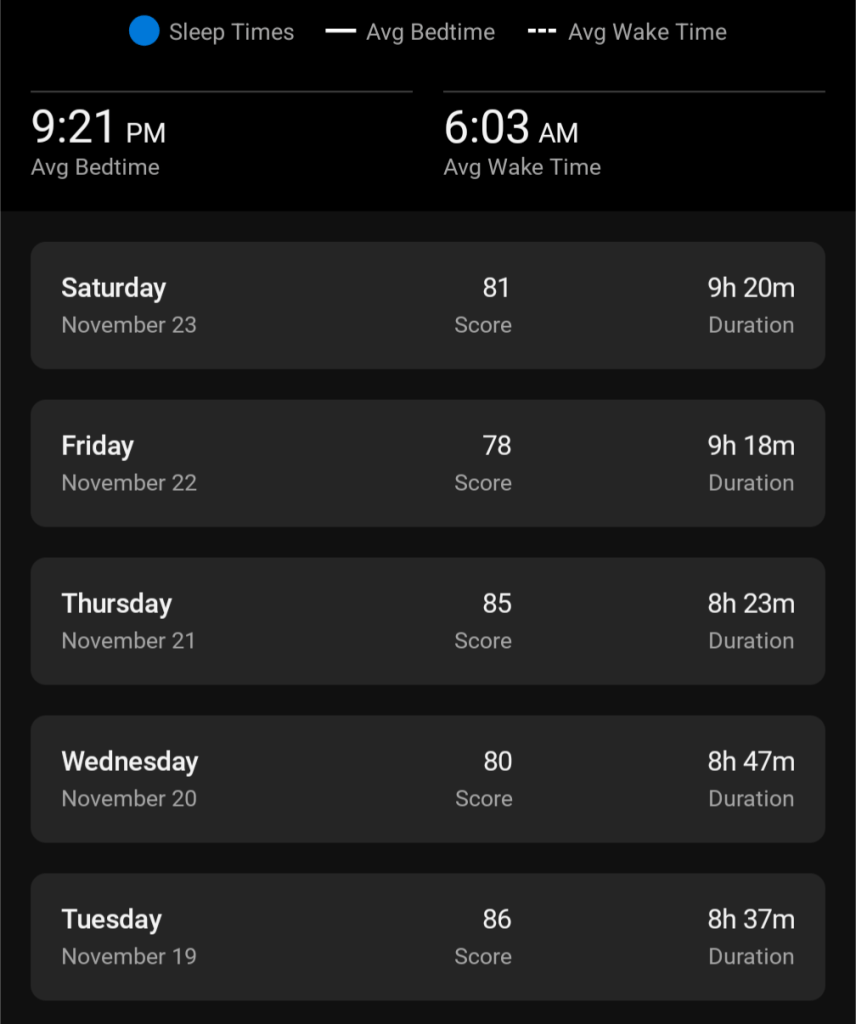
I struggled with Insomnia for many years, it was almost impossible for me to get more than three hours of sleep at a time, and even then it was poor quality. I never truly felt well rested. I started implementing new “sleep hygiene” habits and it has made a world of difference. I sleep so well now, usually between 8.5 and 9.5 hours each night. I do not tell you this to brag, but to share what has worked for me.

Proof I sleep good now ⬆

What causes sleep disruptions?

While many things can cause sleep disruptions, there are a few well known offenders such as stress, travel, work schedule, and lifestyle choices. I will be focusing on lifestyle choices sense they are most easily changed and within our control (for the most part).

Regular Sleep Schedule

Going to bed at all hours of the night harms your natural Circadian rhythm which regulates your twenty-four hour sleep/wake cycle. Winding down and going to bed at around the same time every night triggers your brain to make you feel sleepy at that time. Being consistent about your bed time is one of the best ways to ensure you will be able to fall asleep when you want to. The more you do this, the better it works. I now have a “go to bed” alarm, when I hear it I know that it is time to settle down for the night. This way I have a reminder every night to stop my work for the evening and get some rest!

Caffeine

I am not a coffee drinker, but I LOVE tea. I drink tea every day, and have for years, it is my favorite, but I never drink caffeinated tea after a certain time of evening. It is recommended to stop drinking caffeine about six hours before you want to sleep. For me this means no caffeinated tea after about 3PM, which I think is totally reasonable. Caffeine has a half life of about 6 to 8 hours, which means if you are drinking it late in the day it is still pumping through your system and keeping you wired while you are wanting to wind down.

Exercise

Getting regular exercise throughout your week will help improve your sleep. Aiming for three to five times per week is a great goal, and it doesn’t have to be perfect, just do what you can. The key here is to make sure you are finished with your exercise at least two hours before bed. If you exercise too close to bed time then you run the risk of still being amped up from your workout. All of the endorphins and adrenaline will still be fresh in your body and will not be helpful when trying to doze off.

Dinner

The same rule applies here, try not to have a big meal about two hours before your ideal bed time. If you eat a very large meal right before bed it is unlikely you will get quality sleep. Your body is having to work to digest and metabolize your meal and all of that work does not give your body the change to really calm down for ideal sleeping conditions. Eating at least two hours before bed allows your body to digest and settle before bed, meaning you won’t feel so lethargic and uncomfortable while trying to sleep.

Technology

We are all guilty of this, however we can get better! Try to not use your tech in bed (I know, that sounds rough). It is difficult, especially if you are used to looking at your phone or sleeping with the TV on, but here me out. Sleep experts recommend no technology in bed, and that bed should be a place for sleep and relaxation. Technology is meant to keep us alert, attentive, and engaged, none of which is conducive to a good nights sleep. Aim for no tech in bed thirty minutes before your ideal sleep time. This way you have a chance to disengage, and relax without all of that enticing colorful media shining into your eyeballs. Instead, try to journal, read a book, or do a crossword to relax before bed!

Naps

Taking naps during the day negatively impacts your sleep cycle, especially if you already struggle with sleeping. Do your best to hold off until bed time and then you will be tired at the correct time instead of the middle of the day. Along with this, if you regularly sleep on the couch, break that habit. Having a designated sleep space will help signal to your brain that that place is where sleep happens. The goal is for your bed to be THE PLACE for sleep, and for everywhere else to be for waking hours.

Ambiance

Your bedroom should be dark, quiet, and none stimulating. If you need a small light then you are not alone, just make sure it is small and not bright. I have a small salt lamp that puts off a dim red glow, it is not distracting, and it is not lighting up my whole room. Outside of a small night light like my salt lamp, I have no other lights in the room. I also have some lavender misting spray that i put on my pillow that helps me to feel calm and relaxed. I have invested in a cheap but effective eye mask that I use from time to time, it was especially helpful in the beginning when I would have trouble keeping my eyes closed. The last thing I do to set the ambiance is use my HeadSpace App. I go to the Sleep tab and listen to the “sleeping wind down” video they have, and it puts me down in five minutes or less. It is not loud or distracting, it is just the opposite.

Checking the Time

The first few weeks when you are trying to implement these changes, you will likely still have a bit of trouble falling asleep. If and when this happens, do not roll over and check the time. This will only lead to stress and stimulation. When you check the time every few minutes it will lead to overthinking, and stress about how awake you still are. The goal is to just lay there without looking at anything until you finally fall asleep. The impulse to check the time is coming from wanting to fight your sleep more. Don’t fall for it! If you need to then put your phone on the other side of your room so you can’t check it.

All of these points are free and can applied immediately, so if you are struggling with sleep try them out and let me know if they help. I really hope that they do, we all deserve a good night of sleep.

That’s all for now, thank you so much!

Caelin ❤

Mood-Boosting Foods to Add to Your Grocery List

One of the simplest ways to improve your mood is to prioritize a healthy diet. A healthy diet nurtures a healthy gut, this is important because of your gut microbes. The microbes in your gut produce neurotransmitters such as serotonin and dopamine when you eat nutritious foods. Neurotransmitters like serotonin and dopamine are best know for regulating and boosting not only our mood, but also our concentration. Nutrition psychiatry studies have found direct correlations between our diets and mental health.

Serotonin is not only responsible for making us feel happy and calm. This neurotransmitter is essential for our central nervous system development and function. It assists with our hormonal, autocrine, paracrine, and endocrine functions. So where is most of the serotonin produced in the body? You may be surprised to find out that only about ten percent is produced in your brain, and the other ninety percent is produced in your gut.

The science behind it:

Foods containing mood boosting nutrients like Zinc, Folate, Magnesium, Potassium, Vitamin C, Fiber, Iron, B Vitamins, and Omega-3 fatty acids help us to have energy, clarity, and reduce anxiety and depression throughout the day.

In contrast, foods high in fat, sugar, and salt (processed foods) are associated with increased anxiety and depression. These types of food can also make us feel lethargic and like we have brain fog.

Let’s get to the good stuff! Here are seven foods that will help boost your gut health and your mood –

1.) Dark Chocolate

Dark chocolate contains amino acids and weaker stimulants that can help improve our mood. These components of dark chocolate are known to produce both serotonin and dopamine, this helps us feel happier and can act as a defense against feelings of depression. Dark chocolate also has a high amount of Iron and flavonoids, making it great for decreasing inflammation and promoting healthy red blood cells.

2.) Blueberries

Blueberries are high in fiber, vitamin C, K, manganese, and potassium, making them great for lowering blood pressure, preventing heart disease,improving memory, and aiding in exercise recovery. Berries are rich in antioxidants, which also may help reduce depression symptoms. A diet high in fruit and vegetable intake is known to improve mental health. Blueberries in particular are being studied more for there potential ability to protect against cognitive decline that happens as we age.

3.) Avocado

Avocados contain Choline, a nutrient that your brain and nervous system use to regulate memory, mood, and muscle control. The mono-saturated fat found in avocados not only helps to maintain healthy cholesterol levels, but also has been found to help reduce anxiety specifically in women. Avocados are also high in B vitamins which help your body to make energy and lower stress levels.

4.) Spinach

Spinach is a significant source of vitamins K, A, and C, which promote healthy blood, normal vision, immune health, and muscle growth and recovery. It is also an excellent source of Folate as well. Spinach also contains high levels of Iron, Potassium, and Magnesium, we really should all be eating way more spinach!

5.) Green Tea

The amino acid Theanine found in green tea leaves helps to calm the mind and keep stress levels down. Theanine has also been found to reduce overall anxiety. Green tea is also high in antioxidants which may help to prevent and repair cellular damage. It may also help to reduce inflammation, decrease cognitive decline, and even protect against cancer and heart disease.

6.) Bananas

Bananas are especially rich in vitamin B6m which your body needs to create serotonin. One medium banana contains about 0.4 mg of vitamin B6 (about 25% of the daily recommended intake). Bananas are also a good source of Potassium, Magnesium, and fiber making them beneficial for digestion, and heart health. They are a good source of energy for the body, promote muscle function, and also contain antioxidants.

7.) Mushrooms

Mushrooms contain a lot of vitamin D, which has been shown to have impressive antidepressant qualities. Mushrooms are also one of the best sources of Selenium, a mineral that helps your body make antioxidants that can reduce cell damage. They also contain vitamins B2, B3, B5, and B9 (also known as Folate). B vitamins are essential for cell growth and formation, making mushrooms a very healthy food option!

Some thoughts on nutrition –

No one food is going to be a magical cure all, however making healthy dietary decisions daily will provide positive benefits for your physical and mental health. It is important to keep in mind that a healthy diet paired with exercise is the best way to reduce our risk of chronic diseases. Worldwide the most common noncommunicable diseases in order are cardiovascular diseases, cancer, chronic respiratory diseases, and diabetes related diseases. A healthy diet and regular exercise is the best way to prevent all of these conditions.

Thank you so much for reading, and I wish you nothing but health and happiness.

Pursuit, Plants, Serenity

How To Be Happier

When we think of being happy, we may start daydreaming about what it might take to make us feel happy. We may think of a new job, new routine, new car, or even different hobbies. These external things and thoughts of a future we do not have yet will only get us so far. Most of us would only experience temporary happiness from getting new things or having a change of scenery. Long term happiness comes from something different, an internal shift. 

Happiness is something we choose everyday, it has to be intentional. Similar to any other goal we have, showing up and putting in the upfront work is what matters. Intentional happiness is like exercising a muscle, at first it may be uncomfortable, but after a while it starts to feel more natural. To achieve long term happiness we have to change our mindset to be more content, confident, and satisfied. Feeling happy with what you have is a very important place to start. Often this mindset is called gratitude, gratitude is realizing all the things you have that bring your life joy, comfort, and stability. Sometimes it can be hard to practice gratitude, especially when we are going through a challenging time. The important thing to remember is we have more control over our lives than we may think, whatever challenge we may be going through will eventually pass and get better. 

A lovely piece of wisdom I heard a couple years ago is taking a situation that on the surface looks bad, and probably even feels bad, and asking yourself “How is this the best thing that has ever happened to me?”. This question is an extreme take in the opposite direction of negativity. It is meant to be a question that really makes you think hard about what good could come out of a perceived bad situation. 

I do want to make it clear that I do not support repressing or ignoring your emotions. Emotions can be complicated and overwhelming. In my experience the best way to deal with big emotions is to acknowledge them, and then let them pass. Feel what you are feeling, and then let it go. The exercise mentioned above is a practice in not staying stuck in a negativity spiral, and is not meant to shove down any emotions you may be having. Instead it is giving you the opportunity to look at a situation through a different lens so that you can work through the problem at hand. 

You can also practice gratitude while still having the intention and motivation to make changes in your life. Gratitude does not mean that you have to stay in the same situation, or that you can not make changes for a better future. All it means is finding peace and serenity in the current moment. Having serenity in your current situation will allow you to have a clear head so that you can better evaluate the next right step. A good place to start with a gratitude practice is journaling. I enjoy writing a few things when I first wake up in the morning. Starting my day off this way sets the tone for having gratitude, patience, and positivity with any situation I encounter. I do not write any specific amount of things, I just jot down whatever comes to mind. Today the things I wrote down were “a storm I got to watch last night, my dogs, and my progress in learning a second language”. 

Another way you can incorporate gratitude into your life is acknowledging when you have a thought you do not like, and then out loud telling yourself a different story. All thoughts we have are really just stories we tell ourselves. Sometimes they aren’t even our own stories, they are stories that other people have told us. Thoughts like “traffic sucks, people don’t like me, I can’t achieve this goal” are all stories we think, most of which are probably not our original thoughts. So tell yourself a different story, take sitting in traffic as an opportunity to listen to an audio book. Think of three people that definitely like you, and assure yourself that you can absolutely accomplish this new goal. Those stories are far more likely to be true anyways. Change the narrative in your head and you will start to see your outlook on things change dramatically in a relatively short amount of time. 

The last piece of advice I have for you is to understand that certain things are outside of your control. This may sound simple, but it is really hard to put into practice. You do have control over your attitude, your mindset, what you eat, how you treat your body, and a lot of other things! You do not have control over other people, how they act, what they do, the weather, or what time of day it is. When something outside of your control happens, try hard not to let it weigh on you for too long. Take notice of the frustration or disappointment, and then understand that it is out of your control and let it go. Putting this into practice during your day to day will give you so much peace and serenity. As much as it may not feel like it sometimes, you do have more control than it seems, even if that control is just over how you respond to situations. 

Overall being happier takes practice just like anything else, and it will take effort to feel the change. The effort you put in is worth it, and will benefit you and your loved ones in the long term. Start small and implement some of the above listed exercises and see what differences you feel in a few weeks time. It may even be beneficial to journal about any changes you feel during this process. Keeping track of how you feel each time you respond in a new way to a situation could keep you motivated in this journey.

I hope this has been helpful and that you continue to find happiness in your life. 

Pursuit, Plants, Serenity.